
Liposuction removes localised fat deposits through fine cannulas when diet and exercise have not shifted them. It is a contouring operation. It is not a treatment for obesity and it will not make you lose weight in any meaningful sense: the scale may barely move, while the outline of the treated area changes.
Typical areas are the abdomen, flanks, back, outer and inner thighs, knees, upper arms and the area under the chin. Because the result depends as much on your skin and your weight stability as on the surgeon's technique, the first part of any consultation is about whether liposuction is the right tool at all.
Who it suits, and what it does not do
Good candidates are close to a weight they can maintain, have firm, elastic skin and have one or more fat deposits that stay out of proportion despite a reasonable lifestyle. General health matters too: the surgeon will want to know about heart and lung conditions, diabetes, clotting problems and the medication you take.
It does not remove cellulite or stretch marks. It does not tighten slack skin, and a significant skin excess points towards a different operation, such as an abdominoplasty or a thigh or arm lift. The result also depends on weight stability, since remaining fat can enlarge if weight goes up afterwards. Liposuction is a poor choice if:
- you hope to lose a large amount of weight with it;
- your weight is still changing, or you are planning a pregnancy soon;
- loose skin, rather than fat, is the main concern;
- you smoke and cannot stop around the operation, or have a medical condition that has not been assessed.
How the fat is removed
Small incisions of a few millimetres are made in discreet places. The area is first filled with a tumescent solution of saline, a local anaesthetic and adrenaline, which reduces bleeding and pain. The surgeon then moves a thin cannula back and forth under the skin to break up and suction the fat. Variants use a vibrating cannula (power-assisted), ultrasound or laser energy to loosen the fat first; each has advocates, but none replaces the surgeon's judgement about how much to remove and where.
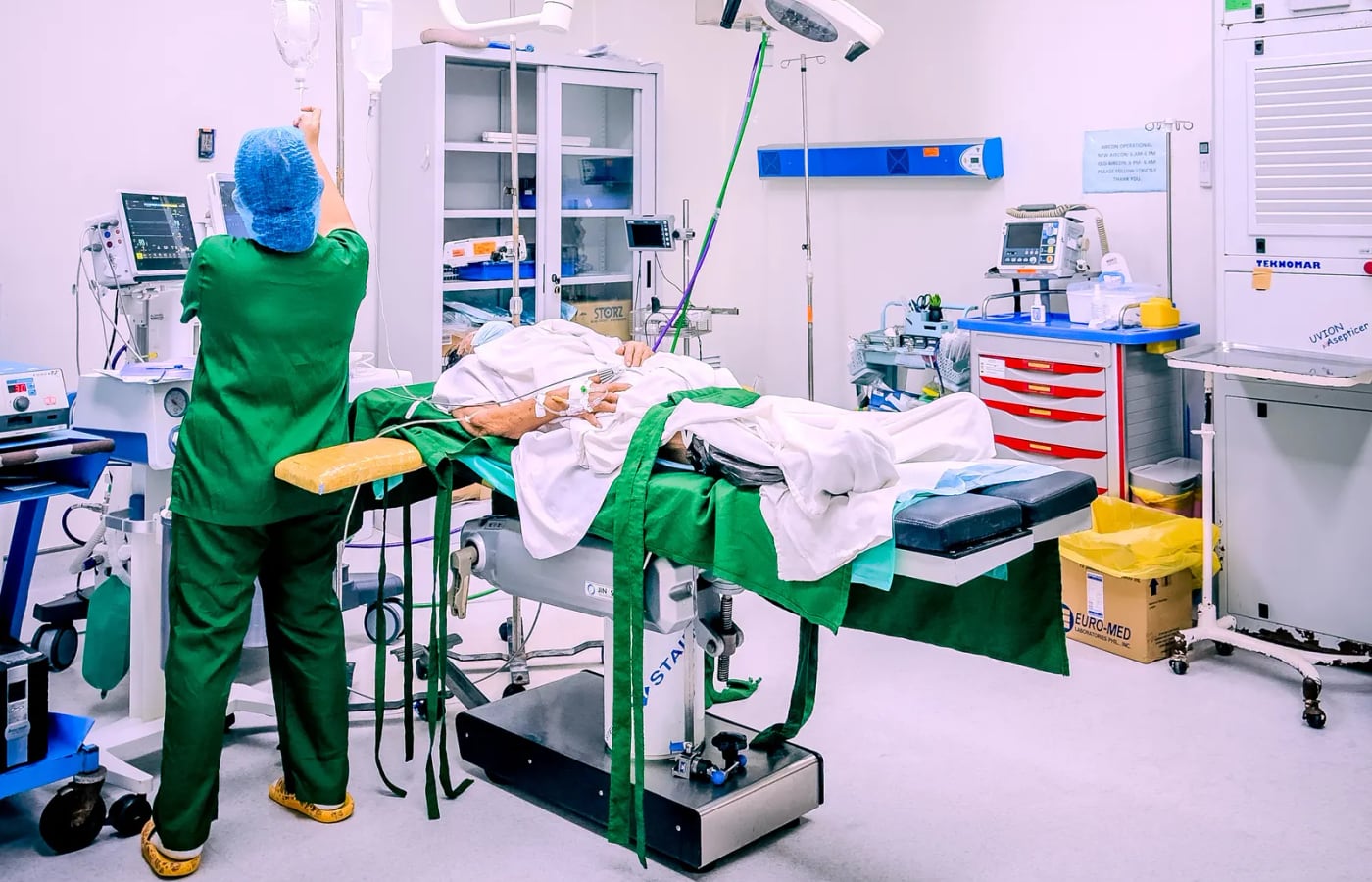
For the areas usually treated in one session, the operation is done under general anaesthesia and takes about one to three hours, depending on the number of zones. Small single-area treatments are sometimes done under local anaesthesia with sedation. The incisions are closed with a stitch or left to drain for a day or two, and a compression garment is put on before you wake.
The question of volume
The 5,000 mL large-volume threshold is often presented as a scientific limit. It is a convention: the American Society of Plastic Surgeons states there is no scientific data supporting an absolute cutoff and that a safe volume is relative to body weight. What the figures do show is that volume shifts risk. In a series of more than 4,500 patients, with a mean of roughly two litres removed, the overall complication rate was 1.5%, but it was 3.7% above five litres against 1.1% at or below. The commonest complication is a seroma needing drainage. Serious risks include pulmonary oedema and pulmonary embolism.
In practice this means the planned volume should be stated, explained against your weight and health, and adjusted downwards if liposuction is combined with another procedure.
Your stay in Istanbul, five to seven days
- Day 1: arrival and hotel transfer, consultation, examination and marking of the areas, blood tests and anaesthesia assessment.
- Day 2: operation, then a night in the clinic or, for limited areas, discharge to the hotel the same evening.
- Days 3 to 4: rest at the hotel with regular short walks; some fluid leaking from the incisions is normal at first; the garment stays on day and night.
- Day 5: check-up, wound inspection and garment adjustment.
- Days 6 to 7: final review; the surgeon confirms you are fit to fly, then you are taken to the airport.
Before surgery, tests should match your health and the size of the operation rather than follow a fixed list. A full blood count is standard before major surgery; kidney function and an ECG are added if you have diabetes or heart, kidney or lung disease. A routine chest X-ray is not recommended for healthy people. Comparing this logic with what a package offers is informative.
What should be in your written quote
Esthappy organises the consultation, the surgeon's and clinic fees, hotel nights, transfers and an interpreter. The written quote should name:
- each area to be treated, and whether fat transfer is planned;
- the anaesthesia type and the nights in the clinic and hotel;
- the compression garment, and whether a second garment is supplied;
- medication and dressings;
- follow-up in Istanbul and remotely after your return.
Anything not written on the quote should be confirmed before you book.
The weeks afterwards
A compression garment is worn constantly for several weeks. Numbness in the treated area typically lasts six to eight weeks. Gentle exercise usually restarts at around three to four weeks, while strenuous activity is avoided for ten to twelve weeks. Bruising and swelling settle gradually over a period that can extend to six months, which is why the final shape cannot be judged from a photograph taken on the day you fly home.
- Week 1: soreness similar to a deep bruise, swelling and tightness; walking is encouraged.
- Week 2: most people return to desk work; bruising fades.
- Weeks 3 to 4: gentle exercise resumes; firm or lumpy areas are common and soften with time.
- Weeks 6 to 8: sensation gradually returns; the garment may be reduced to daytime only, as advised.
- Months 3 to 6: residual swelling settles and the contour becomes readable.
Risks and how they are kept low
Beyond seroma, the possible problems include bruising, prolonged swelling, contour irregularities or dents, asymmetry, skin discolouration, infection and, rarely, injury to deeper structures. Clots and fluid shifts are the serious ones. They are reduced by a realistic volume plan, careful fluid management during the operation, clot-risk assessment, early walking and, where indicated, anticoagulant injections. Telling the surgeon about every medicine and supplement you take matters, since some increase bleeding.
Questions worth asking
- Which areas would you treat, and which would you leave alone in my case?
- How much volume do you plan to remove, and how does that relate to my weight?
- Is my skin likely to retract, or would a lift give a better outcome?
- What happens if a contour irregularity appears, and who reviews me for it?
- Which anaesthesia do you recommend, and why?
- When do you expect to clear me to fly?
Follow-up once you are home
Send photos at the agreed intervals so the team and surgeon can follow the settling of the contour. See a doctor locally the same day for calf pain or swelling, breathlessness, chest pain, fever or a rapidly enlarging, painful swelling. A soft, fluctuating swelling can be a seroma and usually needs a simple drainage.
Ask for your operation note in writing, showing which areas were treated and how much volume was removed from each, together with the discharge summary and medication plan. Without that information, any doctor who sees you later has to guess.