
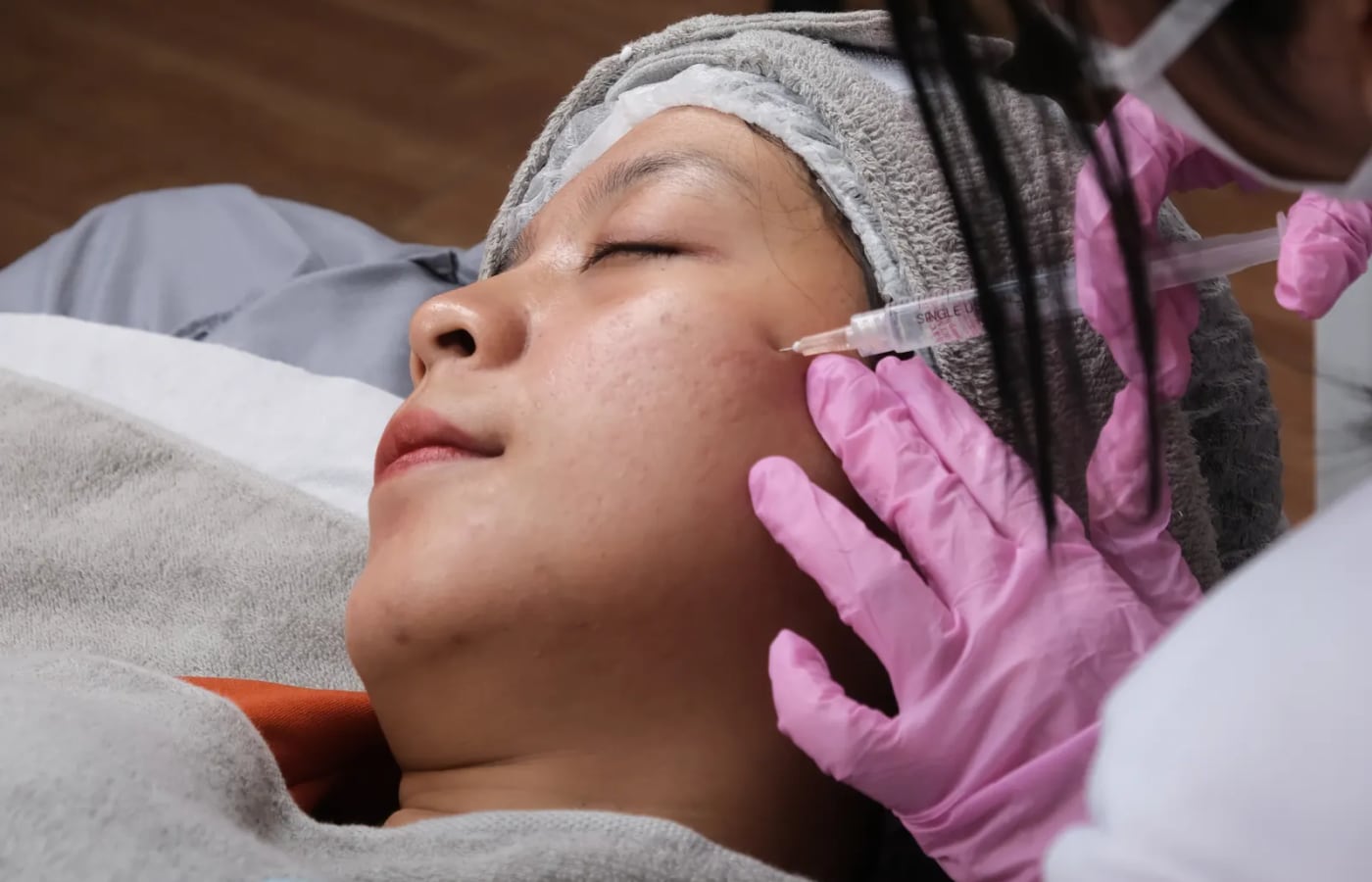
Vascular therapy targets the small blood vessels that show at the surface of the skin: fine red lines on the face, known as telangiectasia, redness across the nose and cheeks, small bright red cherry angiomas, spider veins and thread veins on the legs. Energy is delivered at a wavelength absorbed by haemoglobin, the pigment in red blood cells, which heats and coagulates the target vessel while sparing the skin around it. The treated vessel is then cleared by the body over the following weeks.
For a visitor, one point matters from the outset: a single session is rarely the whole treatment. Several spaced sessions are usual, so the visit to Istanbul is better seen as the start of a plan, with further sessions either on a later trip or with a practitioner near your home who receives a full record of what was done.
Which red marks respond, and which need another approach
Fine, superficial vessels on the face generally respond well, and so do cherry angiomas and small spider veins. Other situations are less straightforward:
- Thread veins on the legs are less predictable and are sometimes better suited to sclerotherapy, an injection that closes the vein from inside. They can also be the visible sign of underlying venous insufficiency. Assessing that, usually with an ultrasound scan, before treating the surface matters; otherwise the vessels return.
- Diffuse, persistent facial redness belongs to the wider management of rosacea, which includes identifying triggers, adapted skincare and sometimes prescribed treatments. Laser or light is one component of that care, not the whole answer.
- A red lesion that grows quickly or bleeds should be examined and diagnosed before any destruction, as should any lesion whose nature is uncertain.
- Vascular birthmarks, especially in children, are managed by specialist teams over a long period and do not fit a short stay.
It is wiser to wait if you have a recent tan, an active flare of rosacea with spots, have taken isotretinoin in recent months, use medicines that make the skin sensitive to light, or are pregnant. On darker skin the risk of a lasting pigmented mark is higher, which calls for an experienced practitioner and a test patch first.
How the light or laser session works
Several types of device are used, and the choice depends on the lesion and on your skin: pulsed dye and green-light lasers for fine red vessels, longer-wavelength lasers for deeper or bluish vessels, and intense pulsed light, a filtered flash rather than a laser, for diffuse redness. None is right for every case, which is why the reasoning behind the choice is worth hearing.
The session begins with standardised photographs and cleansing of the skin. You wear protective eye shields throughout. Most devices include contact or air cooling, and anaesthesia is normally not needed: each pulse feels like the snap of a rubber band, with brief warmth. A facial session usually takes around 30 minutes. Immediately afterwards, treated vessels may fade, darken or turn slightly grey, and the skin is pink and warm. With some settings, small purple marks appear along the treated vessels; they are expected and temporary.
Your two days in Istanbul
Day 1 – assessment and first session. After arrival and transfer to your hotel, you see the doctor with an interpreter. The consultation covers your skin type, triggers, medicines and previous treatments, and for leg veins whether a venous assessment is needed. Photographs are taken and the plan is explained. If you are suited, the first session follows the same day; on darker skin a test patch may be done instead, with the full session planned for a later visit once the result can be judged.
Day 2 – skin check and flight home. The treated area is reviewed, you receive written aftercare instructions and a record of the session, and you are taken to the airport. A light-based treatment does not usually prevent flying; the doctor confirms that you are fit to travel. Cabin air is dry, so a moisturiser and your sunscreen belong in your hand luggage.
What your written quote should cover
Esthappy organises the stay and sends a written quote listing exactly what is included. For vascular therapy it should cover:
- the consultation, skin assessment and photographs;
- the number of sessions included, stated explicitly, and any test patch;
- a venous assessment for leg veins, where the doctor considers it necessary;
- your hotel, airport and clinic transfers, and an interpreter;
- remote follow-up and a written record of the device and settings used.
Ask how further sessions would be organised and whether they are part of the quote or planned separately.
After the session, week by week
First 48 hours. Redness, warmth and mild swelling are common; swelling around the eyes can be more visible in the morning. Cool compresses help. Avoid hot showers, saunas, intense exercise and alcohol, all of which increase flushing. Desk work is possible straight away, and make-up can usually be used again once the doctor allows it, often the next day if there are no crusts.
Week 1 to 2. Any purple marks fade over one to two weeks. Leg vessels often look darker before they fade, which takes longer than on the face.
Weeks 3 to 6. The body clears the treated vessels and the effect of the session can be judged against your photographs. A further session, if needed, is usually planned after about four to six weeks.
The following months. Sun avoidance and daily sunscreen are part of the treatment rather than general advice. Vascular lesions tend to recur over time, particularly on skin that flushes easily, so the sensible expectation is periodic maintenance rather than a permanent cure.
Risks and how they are reduced
- Bruising-like purple marks and swelling, common and temporary; settings can be adjusted if you need to avoid visible marks.
- Blisters, crusts or burns, uncommon, usually linked to tanned skin or excessive energy. A recent tan is a reason to postpone.
- Pigment change, darker or lighter patches, more likely on darker skin; reduced by a test patch, cautious settings and strict sun protection.
- Scarring, rare with appropriate settings.
- Eye injury, prevented by protective shields for you and the operator throughout.
- New fine vessels or brown staining on the legs, particularly after sclerotherapy or if underlying venous insufficiency was missed.
- Recurrence, which is part of the nature of these lesions rather than a failure of treatment.
Questions worth asking first
- Which device is being used, and why does it suit my lesion and my skin?
- How many sessions are realistically likely, and how far apart?
- Should my leg veins be assessed with ultrasound before any surface treatment?
- Will a test patch be done on my skin type?
- Who performs the session, and how often do they treat this kind of lesion?
- What is offered if the vessels come back? A clinic that says openly that maintenance is expected is being straight with you.
Once you are back home
Part of the redness changes on its own between sessions, so the only reasonable way to judge the result is with standardised photographs taken in the same light and from the same distance. Send them to the medical team at around one and six weeks. Reviewing the triggers that make your face flush, hot drinks, spicy food, alcohol and sudden changes of temperature, also affects how long the result lasts.
Take home the written record of the device, wavelength, settings and areas treated: a practitioner near you can then continue the plan safely. See a local doctor if blisters, oozing, increasing pain or signs of infection appear, and urgently for any eye pain or change in vision after treatment near the eyes. Dark patches that appear in the following weeks should be reported early, with photographs, so that sun protection and any needed treatment can start promptly.