
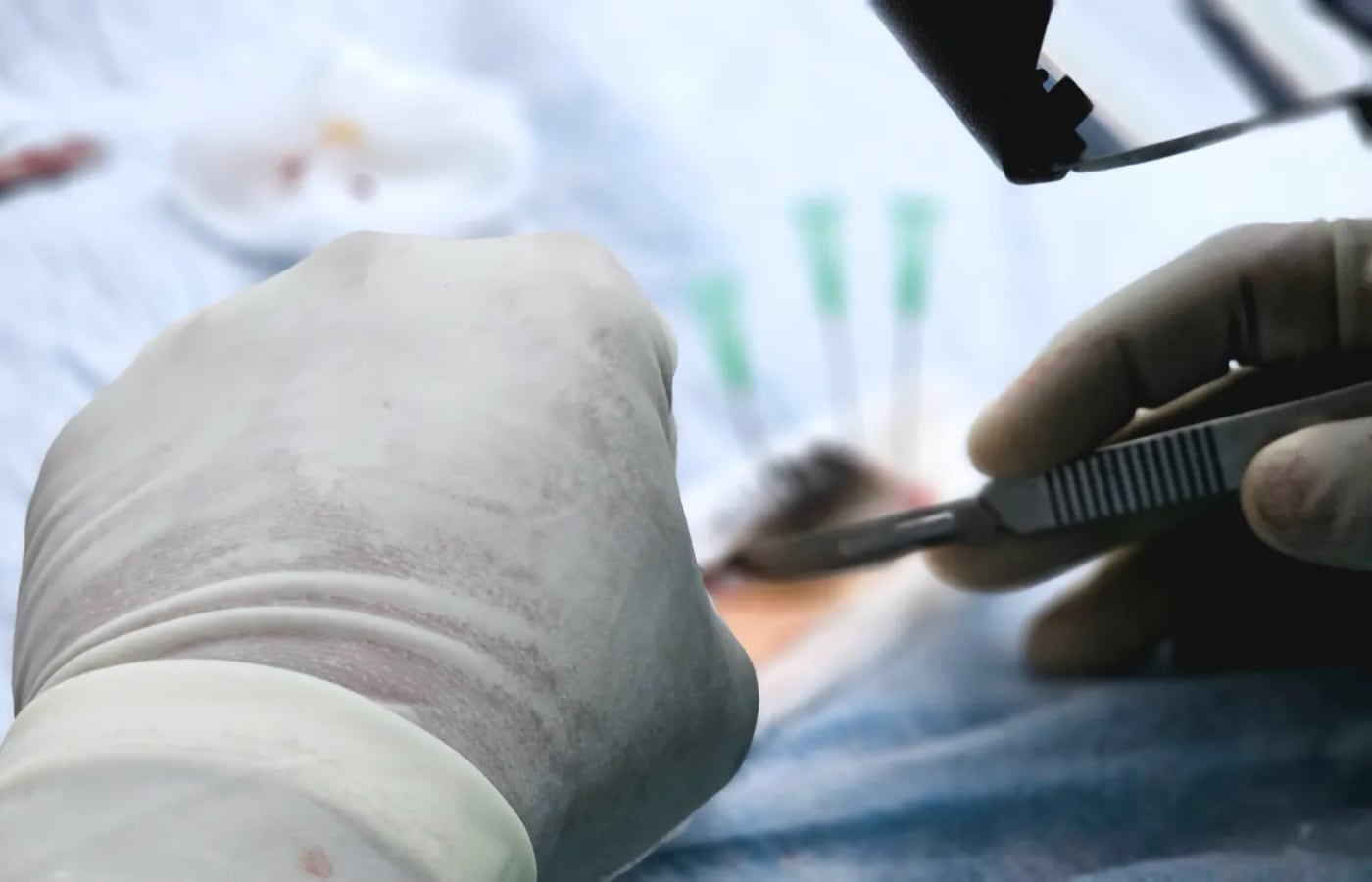
An unshaven hair transplant is follicular unit extraction carried out without shaving your head. The recipient area keeps its length, the grafts are placed between the hairs you already have, and the donor area is either left long, with hairs trimmed one by one where units are taken, or shaved only in narrow bands that your longer hair covers. The aim is discretion: going back to work or family life with little sign that anything was done.
That discretion has a cost in time and in scale. Working between long hairs is slower and more demanding for the team, so sessions are longer and the number of grafts that can sensibly be moved in one day is lower than in a fully shaven FUE. This page sets out who the approach suits, how it is done, how three days in Istanbul are organised, and how recovery unfolds.
Is an unshaven transplant the right choice for you?
The technique is suited to small to medium areas. Typical candidates include:
- men refining or lowering a hairline slightly, or filling the temples;
- people densifying an area that still carries hair, such as a thinning front or parting;
- women with patterned thinning, for whom a full shave is often not acceptable;
- people repairing a previous transplant or a small scar;
- anyone whose work or circumstances make a visible shave difficult.
It is usually not the right tool when a large bald area needs many grafts in one session, when the donor area is weak, or when your hair is so short that there is nothing to hide shaven bands or crusts under. In those cases a classic shaven FUE, or two smaller sessions, may give a better result. The usual medical reasons to wait also apply: loss that is still progressing quickly without a stable pattern, diffuse shedding linked to anaemia, thyroid problems or recent illness, active alopecia areata, uncontrolled diabetes, or blood thinners that cannot be adjusted with your doctor's agreement.
How the procedure is carried out
The operation takes place under local anaesthesia and usually lasts 6 to 9 hours, longer than a shaven session for the same number of grafts. You are awake and can rest, with breaks during the day.
Donor area options
- Long-hair FUE. Selected hairs are trimmed individually before extraction and the rest of the donor area stays long. This is the most discreet option and the slowest.
- Partially shaven donor. One or more narrow bands are shaved low on the back of the head and covered by the hair above them. It allows more efficient harvesting while staying hidden, provided your hair is long enough.
Recipient area
Grafts are placed between existing hairs, either with a Choi-type implanter pen or into small sites opened with a fine blade. The surgeon must follow the angle and direction of the native hairs closely so as not to damage them, which takes time and good visibility. Hair may be held back with clips or gel while the team works.
Why the number of grafts is limited
Long hair hides what the team needs to see, makes extraction slower, and raises the chance of cutting existing hairs during site creation. Over a long day, the time grafts spend out of the body also matters. For these reasons responsible teams set a lower ceiling than in a shaven session and say so at consultation. If your goal needs more grafts than that ceiling, you will be offered two stages or a shaven approach.
Three days in Istanbul, step by step
- Day 1. Airport pick-up and hotel check-in, then the clinic for examination, blood tests and photographs. The surgeon assesses your donor density and hair length and confirms whether an unshaven plan is realistic, which donor option suits you and how many grafts are planned.
- Day 2. The operation, a full day at the clinic. You return to the hotel in the evening with medication and written aftercare instructions.
- Day 3. A check of the donor and recipient areas, the first wash with guidance on washing long hair gently, and confirmation by the surgeon that you are fit to fly before your airport transfer.
What your written quote should include
Esthappy organises the consultation, the surgeon's and clinic's fees, hotel, airport and clinic transfers and an interpreter. Post-operative medication and the shampoo and lotion for the first weeks are commonly part of it. Make sure the quote states exactly what is included, whether the donor area will be left fully long or partly shaven, the graft target or range agreed after examination, and what would be proposed if a second stage is advisable.
Recovery and the months that follow
- Days 1 to 3. The donor area is tight and sore; simple painkillers usually suffice. Sleep with your head raised. Mild forehead swelling may appear on day 2 or 3.
- Week 1. Small crusts form around each graft, mostly hidden by surrounding hair, but they are there and need daily gentle washing. Many people are back at a desk after 2 to 4 days.
- Week 2. Crusts have usually gone by about day 10. Light exercise resumes after about a week; heavy sport, swimming and sauna after about a month.
- Weeks 2 to 8. Transplanted hairs shed. Some nearby native hairs may shed too.
- Months 3 to 4. New growth begins, fine at first.
- Months 6 to 9. Most people see the change clearly.
- Months 10 to 18. The final result settles.
Washing is a little harder with long hair: lather the lotion in the palms, pat rather than rub, and rinse with gentle water pressure as shown at the clinic.
Risks and how the team reduces them
The general risks are those of any FUE: swelling, minor bleeding, infection, folliculitis, numbness for weeks or months, cysts, poor growth and over-harvesting of the donor area. Two points weigh more in unshaven work. Native hairs in the recipient area can be damaged when sites are created between them, and temporary shedding of surrounding hair, which is common in any transplant, can be more noticeable when the area is already densely covered. It usually recovers within 3 to 6 months.
Risk is reduced by honest graft limits, careful magnification, angles that follow the existing hair, short out-of-body times and cold storage, and by a surgeon who personally plans the session, designs the hairline and opens the recipient sites.
Questions to ask before you book
- How many grafts do you consider safe for me in an unshaven session, and why?
- Will my donor area be fully long, or partly shaven, and how long must my hair be to hide it?
- Do you place grafts with a pen or into pre-made sites between my hairs?
- Who opens the recipient sites, and who extracts the grafts?
- How long will grafts sit outside the body during a longer session?
- What would you propose if a second stage turns out to be needed?
Once you are home
You take home your aftercare instructions, an operation summary stating the number of grafts and the technique used, and your prescriptions. The team follows your recovery remotely through photos sent at agreed points, typically at one week, one month, three, six and twelve months. With long hair, part the hair for these photos so the scalp is visible. See a local doctor promptly for spreading redness, pus, fever, increasing pain or a swelling that grows, and bring your documents. A dermatologist near you can follow any long-term treatment to protect your native hair.