
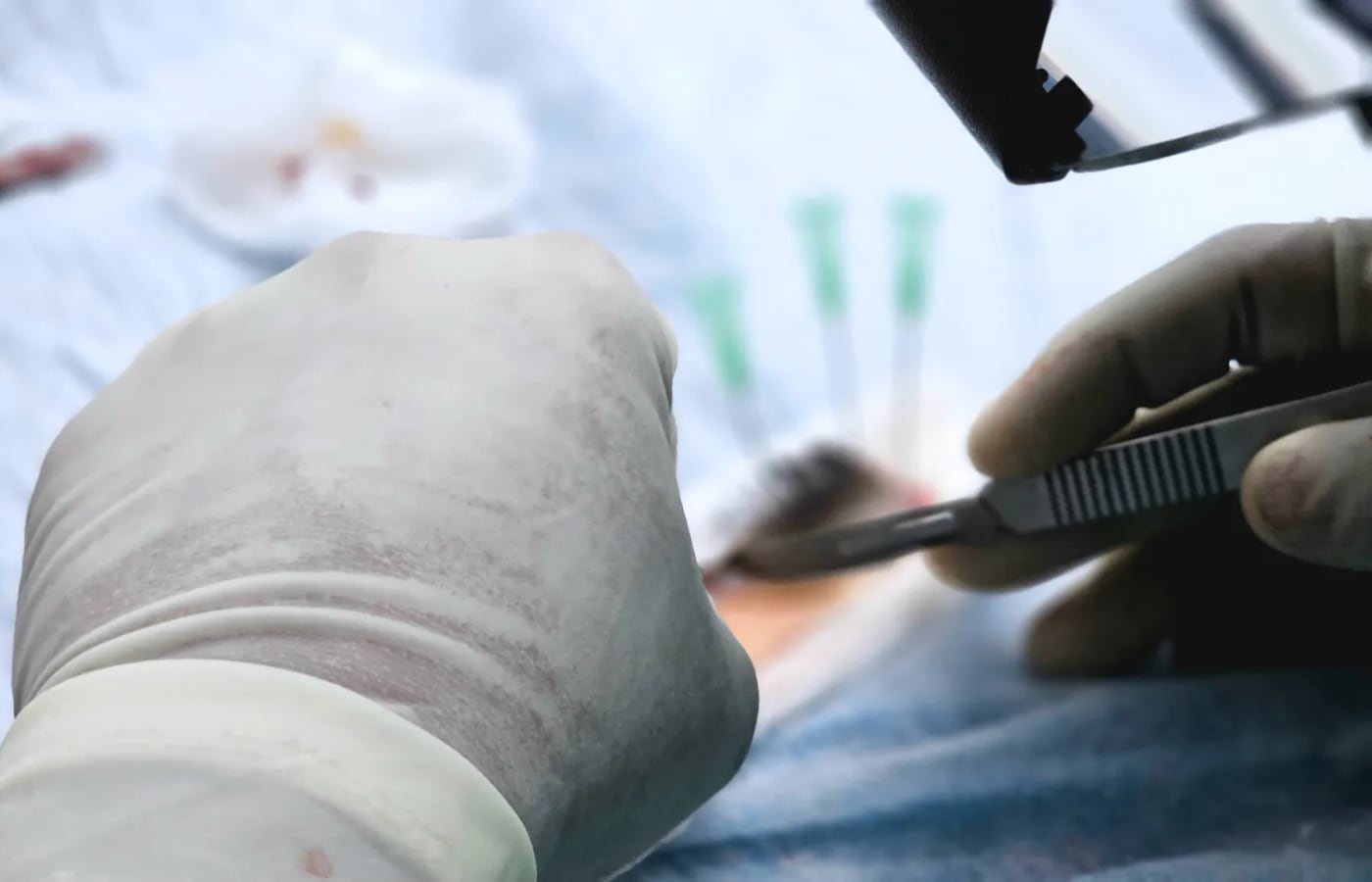
Direct hair implantation, usually called DHI, is not a separate operation. It is a way of carrying out the implantation step of a follicular unit extraction. Each graft is loaded into a Choi-type implanter pen whose hollow needle opens the recipient site and delivers the follicle in a single movement. Harvesting is still ordinary FUE, and the biology that governs the result is unchanged. DHI is also a registered trademark of a hair-restoration group; on this page the term is used in its common meaning, implantation with a Choi-type implanter pen.
Below you will find who the pen-based approach suits, how a session is run, what the evidence does and does not show, how three days in Istanbul are organised, and what recovery looks like until the final result.
When an implanter pen makes sense, and when it does not
The pen is particularly useful for densifying areas that still carry hair, because each graft goes in without a separate cut beside existing hairs, and for fine hairline work where angle and direction need tight control. It is often chosen by people who prefer a limited or no shave of the recipient area, and by women with thinning along the parting.
It is less obviously helpful when a large, completely bald area must be covered in one day. Pen implantation demands several trained implanters and a steady rhythm; for big sessions many teams work just as well, or faster, with pre-made sites. A good team explains which approach it would use for your scalp and why.
The usual reasons to wait or choose differently apply to any hair transplant:
- hair loss that is still early or moving fast, with no stable pattern yet;
- a donor area too thin to supply the grafts needed safely;
- diffuse shedding linked to anaemia, thyroid problems, recent illness or active alopecia areata, which needs a medical work-up first;
- uncontrolled diabetes, a bleeding disorder or blood thinners that cannot be adjusted with your doctor's agreement.
Inside a DHI session
A session lasts about 6 to 8 hours under local anaesthesia. You are awake and comfortable enough to rest, talk or listen to music, with breaks for meals.
- Planning. The surgeon designs the hairline and density zones with you and sets a graft target that respects your donor reserve.
- Harvesting. Follicular units are taken one by one from the back and sides of the head with a fine punch, then counted, sorted and kept cold and moist.
- Loading. An assistant loads each graft into the hollow needle of a pen. Several pens rotate so that the implanting hand is not kept waiting.
- Implantation. The pen is pushed into the skin at the chosen angle and depth and the graft is released as the needle is withdrawn.
What the pen changes
The instrument merges two steps that are usually separate, the incision and the placement. Angle and depth are set at the moment the graft goes in, and the follicle is handled less with forceps. Some teams find this shortens the interval between harvesting and placement; others move just as quickly with pre-made incisions and a skilled placing team. It is a matter of how a team is organised, not a property of the needle.
What the evidence does and does not show
The profession's international body states plainly that direct hair implantation is not a hair transplant method and should not be marketed as one. No randomised trial shows that implanter pens beat forceps for graft survival. None of this disqualifies the instrument, which is legitimate and widely used. It does mean that paying a premium for the label has no demonstrated justification behind it.
Time out of the body, storage between 4 and 10 degrees Celsius, a transection rate held under 10%, the density chosen and the design of the hairline account for most of the gap between two results.
Your three days in Istanbul
- Day 1. You are met at the airport and taken to your hotel, then to the clinic for the examination, blood tests, photographs and the planning discussion with the surgeon. Nothing is final until you agree to the plan.
- Day 2. Operation day. You are collected in the morning and brought back to the hotel in the evening with medication, a light dressing and written instructions.
- Day 3. A check at the clinic, the first gentle wash, and confirmation from the surgeon that you are fit to fly before your airport transfer.
Checking your written quote
Esthappy organises the consultation, the surgeon's and clinic's fees, your hotel, airport and clinic transfers and an interpreter. Medication, special shampoo and lotion are commonly included as well. The written quote should list exactly what is covered, the graft target or range agreed after your examination, whether the recipient area will be shaved, and who will perform each step of the procedure. Ask for anything unclear to be added in writing.
How healing unfolds
- First days. The donor area feels tight and sore for two or three days; simple painkillers usually help. Sleep with your head raised. Some forehead swelling around day 2 or 3 is common and temporary.
- First week. Fine crusts form around the grafts and are softened by daily washing as you were shown. Office work is usually possible after 3 to 5 days.
- Second week. Crusts are gone by about day 10. Redness fades gradually. Gentle exercise after about a week; gym, swimming and sauna after about a month; protect the scalp from strong sun.
- Weeks 2 to 8. Transplanted hairs shed while the follicles rest.
- Month 3. The area can look thinner than before surgery; this is expected.
- Months 3 to 4. New growth begins.
- Months 6 to 9. Most people see the result.
- Months 10 to 18. The final result settles.
Temporary shedding of surrounding native hair is common, usually mild, and recovers within 3 to 6 months. No reliable figure exists for how often it happens.
Risks, and what keeps them low
Possible problems include swelling, minor bleeding, infection, folliculitis, numbness for weeks or months, cysts, shock loss of native hair, poor growth, an unnatural angle or hairline, and visible thinning of an over-harvested donor area. Reactions to local anaesthetic are rare.
What keeps risk low is not the pen itself but the conditions around it: a realistic graft plan, short out-of-body times, cold storage, gentle handling, sterile technique, enough trained hands to keep pace, and a surgeon who personally takes the medical decisions, designs the hairline and supervises the implantation.
What to ask before you commit
- Who performs the implantation with the pens, and how many people are in the room?
- Does the surgeon personally design the hairline and decide the angle and density of the sites?
- Why do you recommend pens rather than pre-made sites for my case, or a combination?
- How long will grafts wait outside the body, and how are they stored?
- What transection rate does your team work to?
- How many grafts can my donor area supply over my lifetime?
Those points rarely appear in a brochure, and they are the ones that decide what you see at a year.
Back home: follow-up and documents
You take home your aftercare instructions, an operation summary with the number of grafts, and your prescriptions. The team follows your progress remotely through photos at agreed stages, usually at one week, one month, three, six and twelve months, and your coordinator remains your contact for questions. If you notice spreading redness, pus, fever, increasing pain or a lump that keeps growing, see a local doctor promptly and bring your documents. A dermatologist near you is the right person to follow any long-term medical treatment for hair loss.