
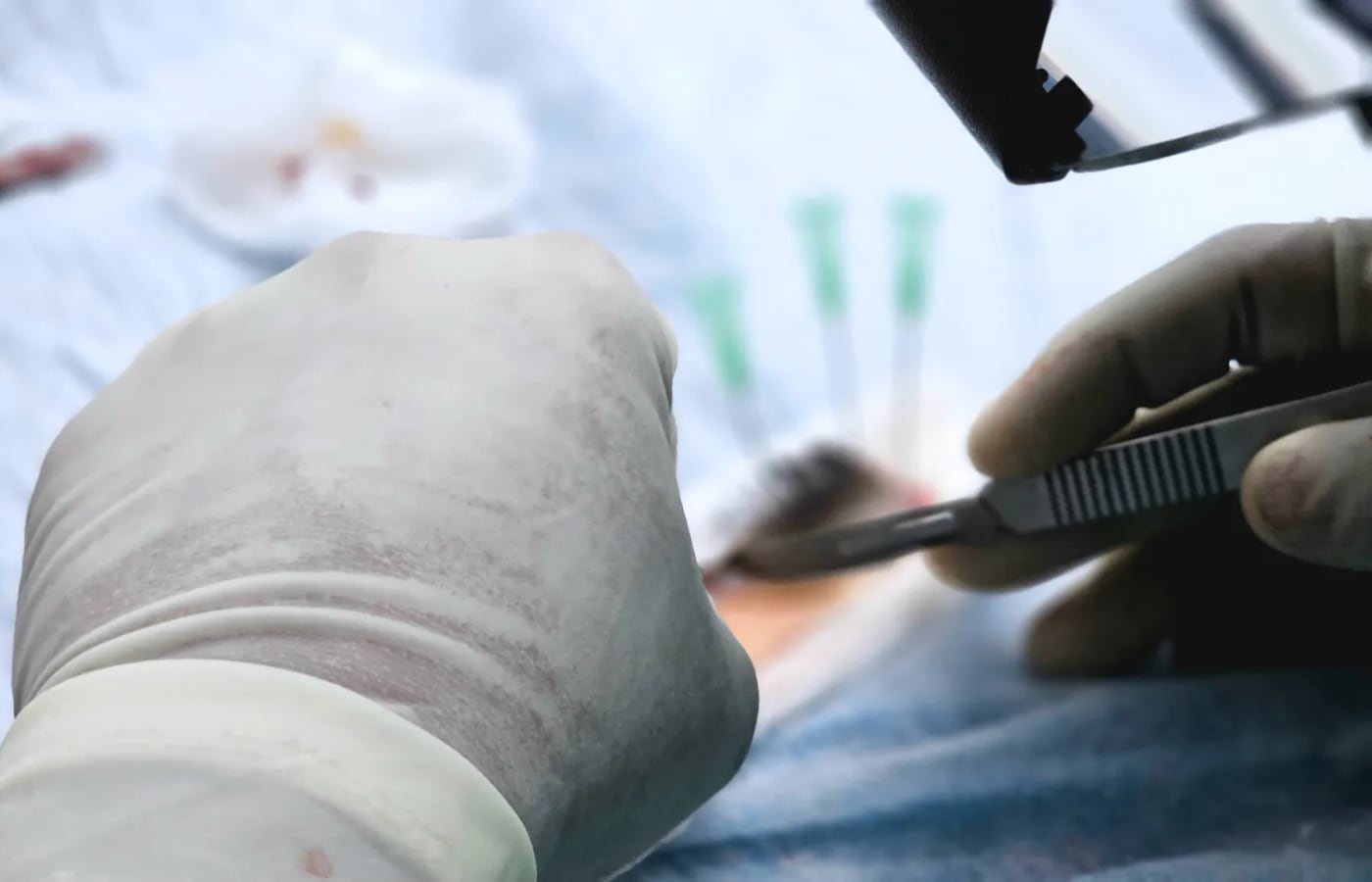
A beard transplant thickens sparse facial hair, covers a scar, or rebuilds a moustache, goatee or sideburns. Grafts usually come from the occipital donor area and are placed overwhelmingly as one- and two-hair units, since larger units on the face read as tufts rather than stubble.
The face is less forgiving than the scalp. A beard is seen in daylight, at conversation distance, and often worn short, so every graft's angle and direction shows. Planning around your own facial features, rather than around a target density, is what makes a transplanted beard look as if it had always been there.
Is a beard transplant right for you?
The procedure suits men whose beard grows in patches, whose cheeks or moustache never filled in, or who have a scar, burn or old injury that interrupts the beard. It is also used to rebuild sideburns or a goatee, and in some cases for transgender men who want a fuller beard once their facial hair has stabilised. A healthy scalp donor area and realistic expectations are the main requirements.
It makes sense to wait or look at other options if:
- you are young and your beard is still developing; facial hair often keeps filling in until the mid-twenties;
- the patches are caused by alopecia areata that is still active, since grafts may be lost in the same way;
- you smoke and are not ready to stop for several weeks around the operation;
- you have a skin condition on the face, such as active acne or folliculitis, that needs treatment first;
- you expect the density of a naturally full beard from a single session.
Working out the numbers
The usual planning figures are 300 to 400 grafts per side for a moustache, so 600 to 800 in total; 600 to 700 for a goatee; around 200 per side for sideburns; 2,000 to 2,500 for a full beard on a bare area; and 300 to 400 to cover a small scar. As anatomical reference points, native density runs 45 to 50 units per square centimetre on the cheek, 75 to 80 on the chin, 85 to 90 on the lateral moustache and 150 to 160 centrally. Those are comparisons, not targets to reach in one sitting.
Planning is done around your face. The aim is not to reach natural reference densities but to build a balanced, convincing distribution; a second session is often more precise than the first, because it is clear where coverage fell short.
How the operation is done, and the angle problem
Grafts are harvested by FUE from the back of the scalp under local anaesthesia, sorted under magnification, and the single- and two-hair units are kept for the face. Single hairs go to the edges, the cheek line and around the lips; two-hair units go where the beard is naturally denser.
Facial incisions are made at 10 to 20 degrees to the skin, far flatter than on the scalp. An angle set too upright produces hair that stands away from the face and is obvious at a glance. This, rather than graft count, is the technical difficulty of the operation. The direction also changes across the face: downward on the cheeks, outward from the centre on the moustache, and in a gentle swirl under the jaw and on the neck. The procedure usually lasts 4 to 6 hours, depending on the area and the number of grafts.
Your three days in Istanbul
- Day 1 – consultation and design. You are met at the airport and taken to your hotel. At the clinic, the surgeon examines your beard and donor area, discusses the shape you want and draws the outline on your face. Blood tests confirm you are fit for local anaesthesia.
- Day 2 – the procedure. Harvesting comes first, then placement, with breaks along the way. You go back to the hotel the same evening with written instructions and medication.
- Day 3 – check and first wash. The team examines the face and the donor area. The first wash is done around twenty-four hours after the procedure, gently and without rubbing. If all is well, the surgeon confirms you are fit to fly and you are taken to the airport.
Items your written quote should list
Esthappy organises the consultation, the surgeon and clinic fees, the hotel, all transfers and an interpreter throughout. The written quote should state exactly what is included, typically:
- the consultation, design and blood tests;
- the procedure, with the zones treated and the planned graft range;
- local anaesthesia, medication and care products;
- the hotel nights and transfers;
- the check and first wash before you leave;
- remote follow-up and the terms of any second session.
Recovery, from first week to final beard
Days 1–3: redness and swelling last two to three days. Small crusts form around each graft. Sleep on your back and avoid touching the face.
Week 1: most people return to desk work after 3 to 5 days, though small crusts may still be visible. Avoid fully immersing the face in water for two to four weeks and protect it from direct sun for a month.
Weeks 2–6: crusts fall away and the transplanted hairs shed. This is expected; the follicles stay in the skin. Trimming with scissors and, later, shaving resume when the surgeon confirms it is safe.
Months 3–4: regrowth begins, often uneven at first.
Months 10–14: the beard matures, and the overall result is judged in this window.
Risks and how they are reduced
Described complications include cobblestoning, a pitted or raised texture seen especially on the chin and under the lower lip; grafts placed in the wrong direction; folliculitis; and post-inflammatory hyperpigmentation, which is more likely on darker skin. Small, precise incisions, correct depth, flat angles and good aftercare lower these risks.
Smoking matters. You are asked to stop for three to six weeks before the procedure: in a published series of 2,896 patients, all reported cases of tissue loss occurred in smokers. Other possible issues are temporary numbness, ingrown hairs and a donor area that looks thinner if too many grafts are taken.
Questions to ask before you book
- How many grafts do you plan for each zone, and why?
- How will you set the angle and direction on my cheeks, moustache and chin?
- Will single- and two-hair units be sorted for the face?
- How will my donor area look afterwards if I wear my hair short?
- When can I trim and shave, and how likely is a second session?
After you are home
The team asks for photos at agreed intervals, for example at one, four, eight and twelve months, through your coordinator. See a local doctor promptly if you notice spreading redness, pus, fever or increasing pain, or persistent bumps that do not settle. You take home a medical report with the zones treated and the grafts placed, your care instructions and the list of medication, which any doctor can read.