
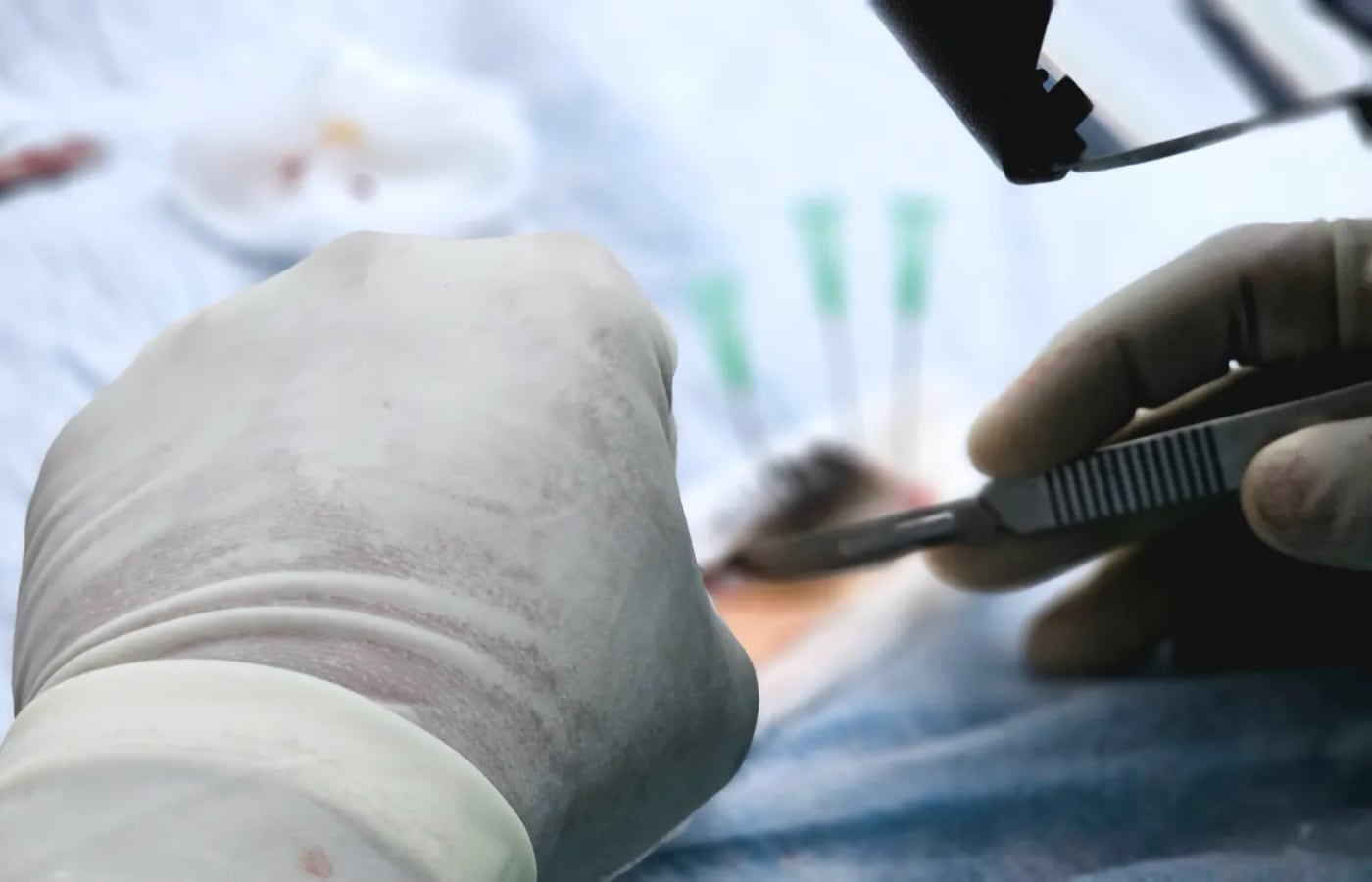
An afro hair transplant follows the same principle as any modern hair transplant: follicular units are taken from the back and sides of the scalp, where hair is resistant to balding, and placed where it has thinned. What changes is the follicle itself. In afro-textured hair the hair is curled not only above the skin but also beneath it, and the root follows a curved path through the tissue. A punch that would remove a straight follicle cleanly can cut a curved one in half. That single anatomical fact shapes almost every technical decision in this operation.
The good news is that curly hair gives a great deal of visual coverage for each graft, because each coiled hair occupies more space than a straight one. A well-planned procedure can therefore look full with fewer grafts than straight hair would need. The challenge is extracting those grafts intact and placing them so that the curl, the angle and the hairline look like your own.
Is an afro transplant right for you?
The procedure suits men and women with afro-textured or tightly curled hair who have pattern hair loss, a receding or uneven hairline, or thinning caused by long-standing tension on the hair. A stable donor area, good general health and realistic expectations about density matter more than age.
Traction alopecia deserves special attention. Tight braids, weaves, extensions, locs and cornrows pulled firmly for years can damage follicles along the hairline and temples. In early traction alopecia, stopping the tension may allow some regrowth, so a transplant is not the first step. Once the follicles are scarred and the area has been stable for a long time, transplantation can be considered, but only if you are ready to change the styling habits that caused the loss. Otherwise the new grafts face the same pull.
You may be advised to wait or choose another path if you:
- have a personal or family history of keloids or hypertrophic scars, which needs careful assessment and sometimes a small test session first;
- have scarring alopecia that is still active, such as central centrifugal cicatricial alopecia or frontal fibrosing alopecia, which must be quiet before any surgery;
- have untreated scalp inflammation, uncontrolled diabetes, a bleeding disorder or take blood thinners that cannot be adjusted;
- have a donor area that is already thin, where the number of available grafts would not match the goal.
How the curved follicle changes the technique
Most afro transplants are performed with FUE, follicular unit extraction, under local anaesthesia. The surgeon first does a few test extractions and examines them under magnification to read the curve and depth of your follicles. Based on this, the team may use a slightly larger punch, a curved or blunt-tipped punch, or a two-step technique that scores the skin superficially and then frees the graft more gently. Extraction is usually slower than for straight hair, which is why a session of 6 to 8 hours is common even for a moderate number of grafts.
In some cases, particularly when the curl is very tight or the donor is limited, the surgeon may suggest FUT, the strip method, in which a narrow band of scalp is removed and divided into grafts under the microscope. It avoids cutting blindly through curved roots but leaves a linear scar, which is a concern for people prone to keloids and for anyone who wears very short hair. Your surgeon should explain why one method is recommended for you.
Placement also needs care. Recipient sites are made to follow the low angle and natural direction of curly hair, and the grafts are handled gently so that the curved root is not bent or crushed. The hairline is designed for afro-textured hair: often softer and more rounded at the temples, sometimes slightly straighter across the front, with a gradual edge rather than a sharp line. Many people also want their natural edges respected, and these details are worth discussing with the surgeon at the drawing stage.
Three days in Istanbul
The stay for an afro transplant is usually three days.
- Day 1 – arrival and consultation. You are met at the airport and taken to your hotel. At the clinic, the surgeon examines your scalp and donor area, asks about keloids, previous scarring and your styling history, and draws the proposed hairline with you. Blood tests are taken to confirm you are fit for local anaesthesia.
- Day 2 – the procedure. The donor area is trimmed short, local anaesthetic is given, and the test extractions guide the rest of the session. A lunch break is included. You return to the hotel the same evening with written care instructions and your medication.
- Day 3 – check and first wash. The team checks the grafts and the donor area, carries out the first gentle wash and shows you how to repeat it. If all is well, the surgeon confirms you are fit to fly and you are taken to the airport.
What your written quote should include
Esthappy organises the consultation, the surgeon and clinic fees, the hotel, all transfers between airport, hotel and clinic, and an interpreter throughout. Your written quote should state exactly what is covered, typically:
- the consultation, blood tests and the procedure itself, with the technique and the planned graft range;
- local anaesthesia and the medication you take home;
- the hotel nights and the transfers;
- the post-operative check, the first wash and any care products;
- how remote follow-up works after you return.
If something is not listed, ask before you travel.
Recovery week by week
Week 1: mild swelling of the forehead is common in the first days. Small crusts form around each graft. You sleep with your head slightly raised and wash as instructed. Most people return to desk work after 3 to 5 days, often with a loose hat.
Weeks 2–4: the crusts come away and the donor area settles. Avoid tight hats, wigs, braids or any tension on the recipient area. Shedding of the transplanted hairs begins and is expected.
Months 2–4: the scalp looks much as it did before surgery. New hair starts to appear, often fine and straighter at first.
Months 6–12: hairs thicken and the curl returns. The final result is usually judged at 12 months, sometimes a little later at the crown.
Risks and how they are reduced
The main specific risk is transection, cutting the curved follicle during extraction, which lowers the number of grafts that survive. Test extractions, adapted punches and an unhurried pace reduce it. Keloid or raised scarring is the second concern; careful screening, minimal trauma to the skin and, where needed, a small trial area lower the risk. Darker skin can also develop temporary post-inflammatory hyperpigmentation around the sites, which usually fades over months and is helped by sun protection.
As with any hair transplant, infection, folliculitis, numbness, temporary shock loss of existing hair and an over-harvested donor area are possible. A realistic graft plan and a donor area that is not pushed beyond its limit protect your future options.
Questions to put to the surgeon
- How much experience do you have with afro-textured hair, and how will you test my follicle curve?
- Which punch type and technique do you plan to use, and why?
- How do you assess my keloid risk?
- Is my hair loss pattern stable, or is traction still active?
- How will my hairline and temples be designed?
- When can I wear braids, extensions or a wig again?
Back home: follow-up and documents
After you return, the team asks for photos at agreed intervals, for example at one, three, six and twelve months, and answers your questions through your coordinator. See a local doctor promptly if you notice spreading redness, pus, fever, increasing pain or a scar that thickens and itches. You leave Istanbul with a medical report describing the technique and graft numbers, your care instructions and the list of medication prescribed, which any doctor at home can read.