
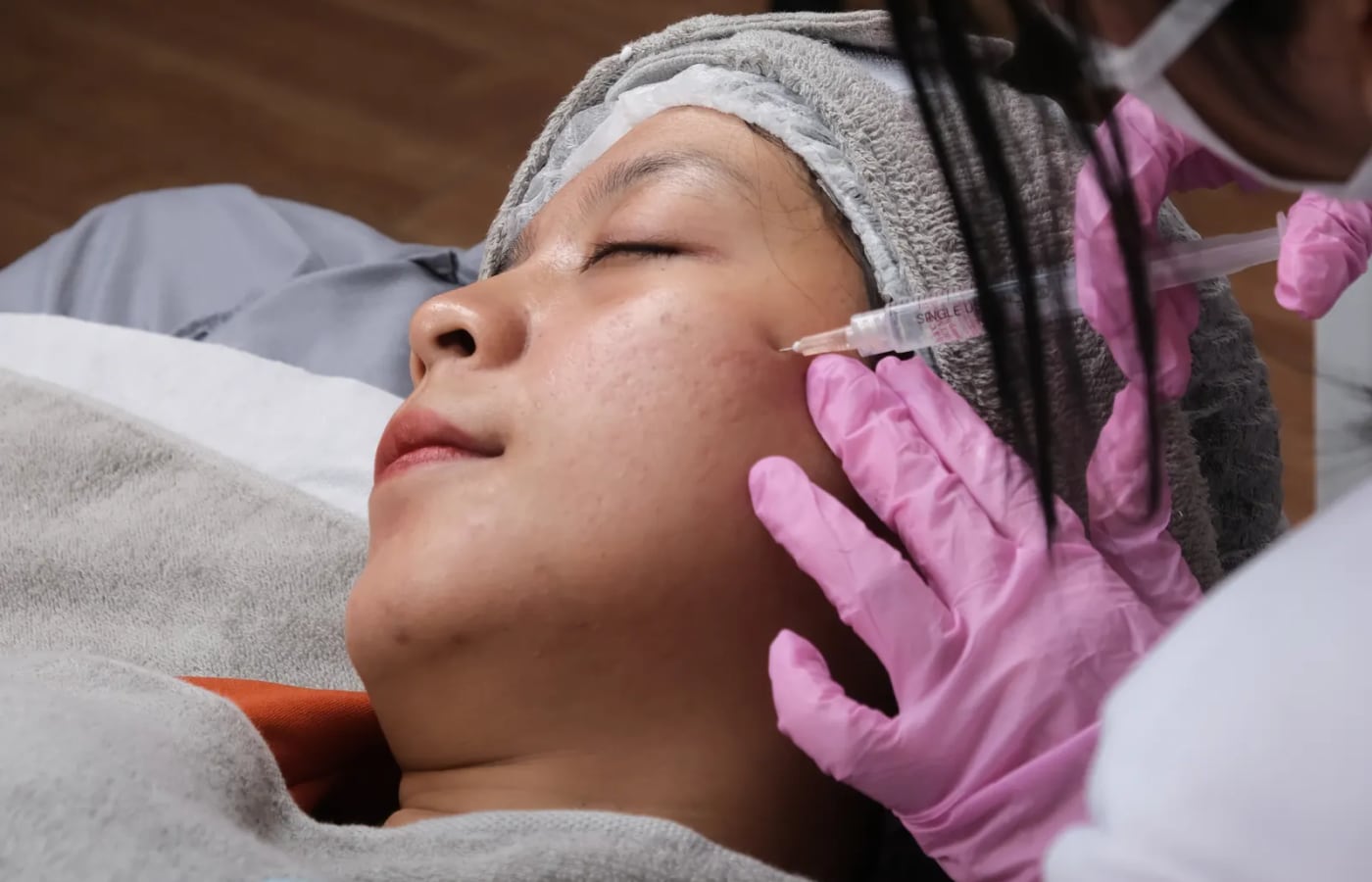
Plasma Pen is a non-surgical treatment that tightens and smooths small areas of skin, most often the upper eyelids, the fine lines around the eyes and mouth, and patches of crepey skin on the neck. The tip of the handheld device never touches you. It creates a tiny electrical arc of ionised gas, a plasma, just above the surface, which heats the outermost layer of skin and leaves a pattern of small brown dots. As those dots heal, the surrounding skin contracts slightly and the deeper layer is prompted to rebuild collagen over the following weeks.
It is worth being clear about what this treatment is not. Plasma Pen has nothing to do with PRP, platelet-rich plasma, which is an injection prepared from your own blood; the shared word causes frequent confusion. Nor is it a substitute for eyelid surgery when there is a genuine excess of skin. It is a modest, gradual treatment with a visible healing phase, and the published evidence behind it is limited: studies are small, protocols differ from one practitioner to the next, and results are measured in different ways. Nobody can honestly quote you a percentage of tightening.
Is Plasma Pen the right choice for your skin?
The people most suited tend to have mild to moderate laxity or fine lines in a limited area, fair to medium skin, and the patience to accept about a week of visible crusts followed by several weeks of pinkness. Slight hooding of the upper eyelid, lines at the outer corner of the eye and vertical lines above the upper lip are typical requests.
Some situations call for a different route, or for waiting:
- Darker or olive skin that tans easily carries a clearly higher risk of lasting dark or light patches after any heat-based treatment. Many practitioners either decline or test a small area first.
- A heavy fold of eyelid skin that rests on the lashes or narrows your field of vision is a surgical question. A consultation for blepharoplasty is more honest than a series of plasma sessions that cannot remove that amount of skin.
- Active acne, cold sores, eczema or infection in the area, a tendency to keloid or thickened scars, pregnancy or breastfeeding, a pacemaker or other implanted electronic device, and recent use of isotretinoin are reasons to postpone or avoid treatment.
- Poorly controlled diabetes, immune suppression and medicines that slow healing should be discussed openly, because the whole treatment depends on your skin healing well.
How a Plasma Pen session is carried out
The appointment begins with photographs taken in standardised light and position, so that later comparisons are fair, followed by careful cleansing of the area. A numbing cream is applied and left to work for a while; the treatment itself then takes about 45 minutes, depending on the size of the area.
The practitioner moves the tip across the skin in a controlled grid, spacing the dots so that bridges of untreated skin remain between them. Those bridges are what allow the area to heal quickly. Energy level and dot density are adapted to the thickness of the skin: lower and more widely spaced on the delicate eyelid, slightly higher on thicker areas. You will feel heat and a prickling sensation. With the cream most people find it tolerable, although the area close to the eye can feel more intense. The eyes are protected throughout, and a soothing preparation is applied at the end.
A visible change can follow a single session, but many people need a second one, typically eight to twelve weeks later, once the first has fully settled. Treating again too early does not speed things up and raises the risk of pigment change.
Your two days in Istanbul
Day 1 – consultation and treatment. After your arrival and transfer to the hotel, you meet the doctor with your interpreter. The consultation covers your medical history, the medicines you take, your skin type and your expectations, and it ends with a clear plan and written consent. If everything is in order, the treatment is carried out the same day. Swelling usually starts in the evening.
Day 2 – check and flight home. A short review of the treated skin, a final explanation of your aftercare and the products to use, then the transfer to the airport. Flying with crusts is generally not a problem, and the doctor confirms that you are fit to travel before you leave. If the eyelids were treated, swelling often peaks on the second or third day; dark glasses help, and some guests prefer to add a night to their stay.
What your written quote should cover
Esthappy organises the whole stay and sends you a written quote that lists exactly what is included. For Plasma Pen it should normally cover:
- the consultation and skin assessment with the doctor;
- the treatment itself, the numbing cream and single-use tips;
- the aftercare products you need for the first week;
- your hotel, airport and clinic transfers, and an interpreter for the medical appointments;
- remote follow-up after you return home.
Ask whether a possible second session is included or would be quoted separately.
Healing week by week
Days 1 to 3. Redness, a feeling of tightness and swelling are normal, and the swelling is most noticeable around the eyes. The dots turn dark brown. Cool compresses and sleeping with your head slightly raised help.
Days 3 to 7. The crusts dry and come away on their own. Do not pick or scratch them: early removal is the most common cause of marks. Keep the area clean, apply the ointment you were given, and avoid make-up on the treated skin until the crusts have gone. Desk work is possible from the next day if you are comfortable with how you look; most people feel ready to return to work after five to seven days.
Weeks 2 to 6. The new skin is pink and sensitive. A high-protection sunscreen every day, a hat and avoiding tanning, saunas and hot baths are part of the treatment rather than a general recommendation.
Weeks 8 to 12. Collagen remodelling continues quietly. This is the point at which the result can be fairly compared with your initial photographs and a second session discussed if it makes sense.
Risks and how they are kept low
- Pigment change. Darkening of the treated skin is the most frequent problem, especially on darker skin types; it usually fades over months but can persist. Lighter patches are less common and may be lasting. Careful selection, a test area, conservative settings and strict sun protection reduce this risk.
- Scarring or uneven texture. Too much energy, dots placed too close together, or crusts picked off early can leave marks. Experience and patience during healing are the main safeguards.
- Infection. Single-use tips, clean technique and good aftercare keep it rare. If you are prone to cold sores, preventive antiviral treatment may be advised before treating around the mouth.
- Prolonged redness or swelling, occasionally lasting longer than expected, particularly on the eyelids.
- A result smaller than you hoped. This is a genuine possibility given the limited evidence, and it is better discussed before than after.
Plasma devices are widely sold, including for home use, and some health authorities have warned against their use without proper medical training. A medical setting and an experienced practitioner are not formalities here.
Questions to ask before you commit
- Who will perform the treatment, and how often do they treat this particular area?
- Is my skin type suitable, and will a test area be done first?
- Are the tips single-use, and what settings are planned for my skin?
- How will the result be measured, and will standardised photographs be taken before and afterwards?
- How many sessions are realistically likely, and how far apart?
- Would surgery be the more appropriate option for my eyelids?
- What is proposed if nothing changes? A clear answer to this question tells you a great deal about how a clinic works.
Once you are home again
You stay in touch with the medical team by message. Sending photographs at around one week, one month and three months, in the same light as the originals, allows the doctor to follow your healing and assess the outcome. You receive a written summary of the treatment, the areas treated, the products used and your aftercare instructions; keep it and bring it to any appointment with a local doctor.
See a doctor near you without delay if you notice increasing pain, spreading redness, discharge or fever, blisters that were not present the first days, or any change in vision or eye pain after eyelid treatment. If dark patches appear in the weeks that follow, send photographs to the team early: pigment change responds better when it is managed promptly with sun protection and, where appropriate, a topical treatment prescribed by a doctor.