
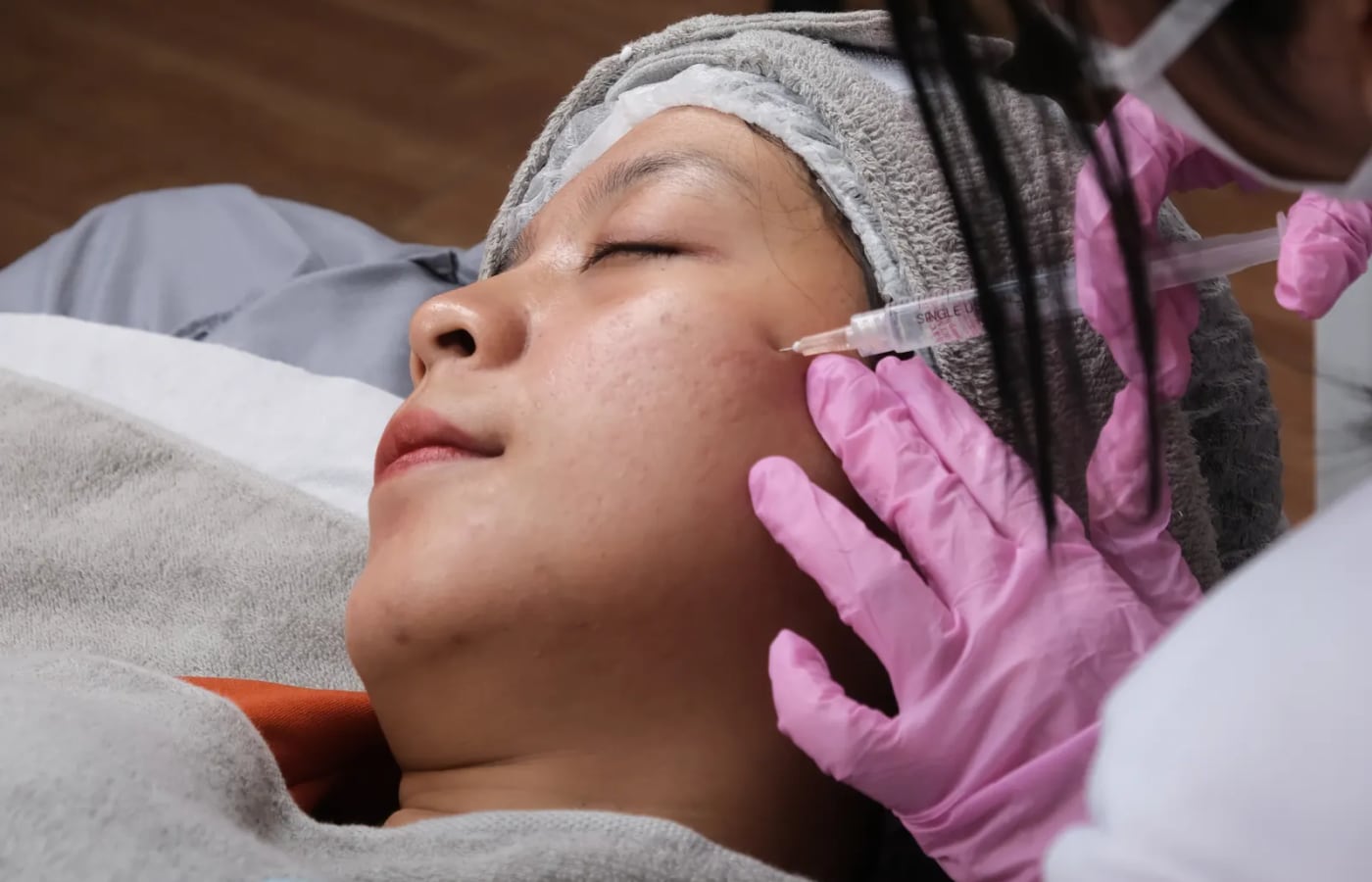
Laser hair removal targets the pigment in the hair to damage the follicle while it is in its growth phase. Light energy is absorbed by the dark pigment in the hair shaft, turned into heat and carried down to the follicle, which is weakened so that it produces finer, sparser hair or none at all. The surrounding skin is spared as far as possible by matching the wavelength and settings to your skin and hair.
The word laser also covers resurfacing, a separate treatment that heats or vaporises the surface layers of the skin to prompt renewal. The indications, the downtime and the risks have almost nothing in common, and this page is about hair removal; a short section further down explains the difference so that you can tell which one you are being offered.
Who it suits, and who should wait
The ideal combination is dark hair on lighter skin, because the laser can then target the hair without heating the skin much. Darker skin can be treated safely with the right laser and settings, but more cautiously. Fair, white and red hair responds poorly, because there is too little pigment to absorb the light; another method such as electrolysis may suit it better.
Some situations call for a pause or a medical opinion first:
- hair growth that has appeared recently or in an unusual pattern should prompt a search for a hormonal cause before any course is started;
- a recent tan or self-tanner raises the risk of burns; treatment is usually deferred until the skin has returned to its natural tone;
- certain medicines that make the skin sensitive to light, or recent acne treatment with isotretinoin, need discussion first;
- active infection, eczema or cold sores in the area should settle beforehand;
- during pregnancy, treatment is usually postponed as a precaution;
- tattoos and moles in the treatment area are avoided or covered.
How laser hair removal is done
Choosing the device
Different wavelengths suit different skin. Alexandrite and diode lasers are commonly used for lighter to medium skin; the longer-wavelength Nd:YAG laser penetrates more deeply and is generally preferred for darker skin because it is absorbed less by the pigment in the upper skin. Intense pulsed light devices are not lasers, but are used for similar purposes on suitable skin and hair. What matters most is that the operator chooses and adjusts the device for your skin, not that a particular name is used.
The session
The area is shaved beforehand so that heat goes into the follicle rather than burning hair on the surface. You and the operator wear eye protection. A cooling tip, cold air or gel protects the skin, and the handpiece is passed over the area in a systematic pattern. Most people describe the sensation as a snap or a warm sting; no anaesthesia is needed, although a numbing cream may be offered for sensitive areas. Small areas such as the upper lip take minutes; legs or the back take closer to an hour.
Why a course is needed
Because only follicles in the growth phase respond, a course of spaced sessions is needed, typically several weeks apart depending on the body area. The realistic aim is a lasting reduction in hair rather than complete removal. Maintenance sessions are commonly required later, particularly in hormonally sensitive areas such as the face.
Your day in Istanbul
A single session fits into one day and is often combined with another treatment or a trip already planned.
- Arrival and consultation: skin and hair assessment, medical history, medicines, and a discussion of how many sessions are likely.
- Test patch: recommended, especially for darker skin or a first treatment. Ideally it is read after a day or two, so you may choose to arrive a day earlier or to start the full session on a later visit.
- Treatment: 20 to 60 minutes depending on the area.
- Before you leave: a check of the skin, written aftercare and your settings recorded. Flying is not restricted, but avoid sun at your destination.
Be clear with yourself about the arithmetic: one trip delivers one session. The rest of the course happens on return visits or with a qualified provider at home, using the record of your settings.
What your written quote should cover
Esthappy organises the consultation, the clinic and practitioner fees, a hotel if you stay overnight, airport and clinic transfers, and an interpreter. The written quote lists exactly what is included, such as:
- the areas to be treated and the number of sessions in this visit;
- the type of device to be used for your skin;
- whether a test patch is included and when it will be read;
- numbing cream or soothing products, if offered;
- a written record of the settings used.
After each session, week by week
First hours to two days: redness and small raised bumps around the follicles are normal and settle quickly. A cool compress and a gentle moisturiser help. Avoid hot baths, saunas, intense exercise and perfumed products on the area for a day or two.
Weeks 1 – 3: treated hairs shed gradually, which can look like regrowth at first. Do not pluck or wax; shaving is fine. Protect the area from sun with clothing and a high-protection sunscreen.
Weeks 4 – 8: new hairs from follicles that were resting appear; this is when the next session is usually planned.
Over the course: hair becomes finer and sparser session by session. The result is judged some months after the last session, and touch-ups may be needed later.
Risks and how they are reduced
The common effects are temporary redness, swelling and itching. Less often, blisters, burns, crusting, and dark or light patches can occur; these are usually temporary but can occasionally persist. Rarely, hair becomes thicker in or near the treated area, particularly on the face and neck. Eye injury is prevented by protective eyewear.
Darker skin is more prone to burns and to lasting dark marks, and must be treated by someone experienced with darker skin tones. No numeric incidence by skin type exists, so distrust any figure offered. Ask for a test patch. Avoiding tanning, choosing the right wavelength, careful cooling, and not treating over tattoos or moles all reduce the risk.
Laser hair removal is not laser resurfacing
Resurfacing is what people underestimate. With a carbon dioxide laser, healing takes up to two weeks; with erbium, about a week, with peeling starting on day five to seven. Pinkness lightens over two to three months and can take up to a year to resolve fully. For comparison, a superficial peel heals in one to seven days and needs three to five sessions every two to five weeks; a medium peel heals in seven to fourteen days, with redness, swelling and possible blistering and crusting; a deep peel means bandaging for fourteen to twenty-one days, two to three weeks recuperating at home, sun avoidance for three to six months and daily sunscreen thereafter, and is done once in a lifetime. None of that applies to hair removal, which has no downtime of this kind.
Questions to ask before you book
- Which device and wavelength will you use for my skin and hair, and why?
- Will you do a test patch, and when will it be assessed?
- How many sessions do you expect, at what interval, and how will I continue them?
- Who will perform the treatment, and what is their experience with my skin tone?
- Is there any reason, such as medicines or hormones, to check before starting?
Back home
Send photos to the team if you notice blistering, crusting or colour changes, so they can be assessed early. See a local doctor promptly for a burn that blisters widely, signs of infection, or patches that darken over the following weeks. Take home the record of the device, wavelength and settings used and the date of your session; any qualified provider continuing the course will need them.