
Botulinum toxin and fillers: duration, limits and the risk nobody mentions
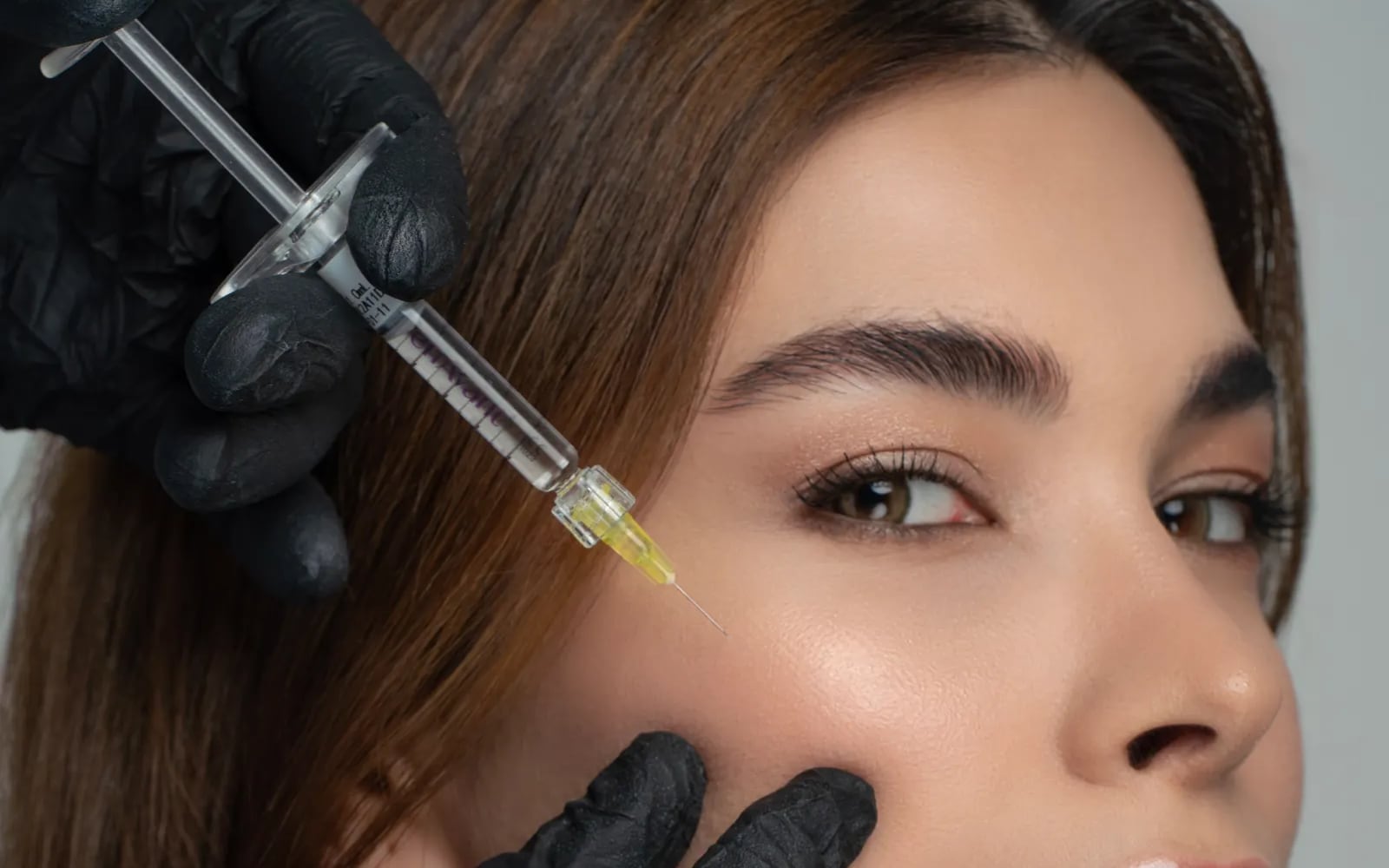
Both are routine and both are quick, but one carries a rare risk of blindness — and the honest answer on incidence is that it is under-counted
Injectable treatments are the most common cosmetic procedures in the world, and the routine nature of them is exactly why the risks are worth stating clearly. Botulinum toxin and dermal fillers do different things, last for different lengths of time and carry different risks. The one that matters most is rare, serious, and almost never mentioned in a consultation.
Botulinum toxin: what is approved and what is not
Cosmetic botulinum toxin has approved uses for three areas: glabellar lines (between the eyebrows), crow's feet, and forehead lines. Every other cosmetic use is off-label. Off-label does not mean prohibited or necessarily unreasonable, and experienced practitioners use it for other areas — but it does mean the treatment has not been assessed by regulators for that indication, and you are entitled to be told which category your treatment falls into.
Approved dosing is 20 units for glabellar lines, 24 for crow's feet and 40 in total for the forehead. Onset is one to two days, with the effect increasing through the first week, so judging the result at 48 hours is premature. Duration is about three to four months.
One point on frequency: dosing more often than every three months has not been clinically evaluated. If a clinic offers top-ups at six weeks, that is a practice pattern operating outside what has been studied.
Botulinum toxin: the reactions to expect
Reported adverse reactions vary by treatment area:
| Area | Reaction | Rate |
|---|---|---|
| Glabellar lines | Eyelid drooping (ptosis) | 3% |
| Crow's feet | Eyelid swelling | 1% |
| Forehead | Headache | 9% |
| Forehead | Brow drooping | 2% |
Botulinum toxin also carries a boxed warning — the strongest regulatory warning available — for distant spread of toxin effect, meaning effects occurring away from the injection site. This is rare in cosmetic dosing but it is the reason the product is regulated as it is, and the reason it should be administered by someone medically qualified to recognise it.
Fillers: the risk that is worth reading twice
Dermal fillers come in temporary (absorbable) and permanent forms. Permanent fillers are approved only for nasolabial folds and for cheek acne scars, and fillers generally are approved for adults aged 22 and over.
The serious risk is intravascular injection — filler entering a blood vessel. The consequences include tissue death, vision problems including blindness, and stroke. This is not a theoretical concern raised for legal cover; it is the reason facial anatomy training matters and the reason injectors keep hyaluronidase to hand.
The numbers, handled honestly: in a series of 290,307 hyaluronic acid procedures, the severe complication rate was 0.0041 per cent overall, with vascular obstruction at 0.0034 per cent. Up to 2018, 146 cases of blindness following filler had been published worldwide, with hyaluronic acid implicated in 81.3 per cent of recent cases. The highest-risk injection sites were the nose (56.3 per cent of cases), glabella (27.1 per cent), forehead (18.8 per cent) and nasolabial fold (14.6 per cent). Complete visual recovery occurred in only 20.8 per cent, and about half of affected patients were left with permanent complete vision loss.
Those percentages are calculated from cases that were reported and published. Incidence is under-quantified, and the accurate description is rare but under-counted — not "one in X". Anyone offering you a precise risk figure for filler blindness is presenting a number the literature does not support.
Regulators also warn specifically against three things: filler used for breast or buttock augmentation, needle-free injection devices, and injectable silicone. If any of these is offered to you, decline.
Duration, and why nobody should give you one number
Filler duration varies by product, by injection site, by depth and by individual metabolism. There is no authoritative blanket figure for how long filler lasts, and we will not invent one. Ask which specific product is being used and what the manufacturer's own data say for the site being treated.
Botulinum toxin's three-to-four-month duration is better established because dosing and indication are standardised. Both treatments are temporary; neither changes the underlying tissue permanently, and both stop working when you stop having them.
What to ask before an injectable appointment
- What product, exactly, and is my treatment area an approved indication or off-label?
- Who is injecting, and what is their medical qualification?
- Is hyaluronidase available on site, and does the injector know how to manage a vascular event?
- What happens if I have a problem after I have travelled home, and who do I contact?
That last question deserves particular weight when injectables are added on to a trip for another procedure. Cosmetic dermatology sits alongside the rest of our treatments, and what is included in a stay is set out under packages and prices.
Which treatment suits your face, whether it suits it at all, and what a realistic change looks like all depend on your anatomy, your skin and what you are trying to achieve. Send photographs — relaxed and with the muscles active, if you can — through our contact page, and we will assess your case individually and free of charge, including telling you where an injectable is unlikely to give you what you are hoping for.