
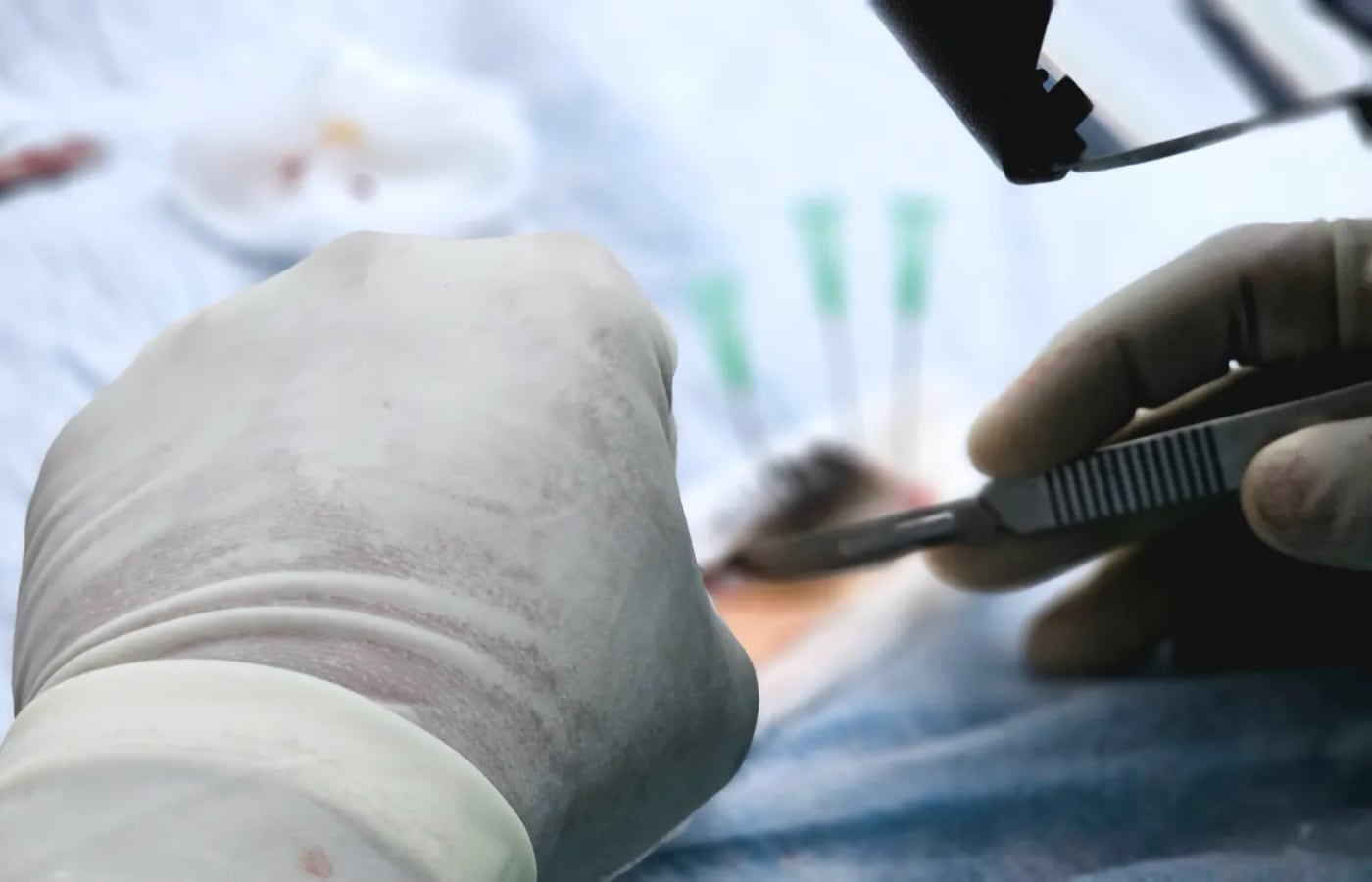
Direct hair implantation is not a separate operation. It is a way of carrying out the implantation step. The graft is loaded into a Choi-type implanter pen whose hollow needle opens the recipient site and delivers the follicle in a single movement. Harvesting is still ordinary follicular unit extraction, and the biology governing the result is unchanged.
How the pen works
The instrument merges two steps that are usually separate, the incision and the placement. Angle and depth are set at the moment the graft goes in, and the follicle is handled less with forceps. Some teams find this shortens the interval between harvesting and placement; others move just as quickly with pre-made incisions and a skilled placing team. It is a matter of how a team is organised, not a property of the needle.
What the evidence does and does not show
The profession's international body states plainly that direct hair implantation is not a hair transplant method and should not be marketed as one. No randomised trial shows that implanter pens beat forceps for graft survival. None of this disqualifies the instrument, which is legitimate and widely used. It does mean that paying a premium for the label has no demonstrated justification behind it.
Where the real differences sit
Time out of the body, storage between 4 and 10 degrees Celsius, a transection rate held under 10%, the density chosen and the design of the hairline account for most of the gap between two results. Ask who performs the placement, how many people are in the room, and whether the surgeon personally designs the hairline and creates the recipient sites. Those points rarely appear in a brochure, and they are the ones that decide what you see at a year.