Who Beard Transplant Can Help and What to Expect in Turkey
Beard transplant in Turkey offers a tailored solution for patchy or missing facial hair, but not everyone is a candidate and the process requires careful planning.
Beard transplants can restore natural-looking facial hair for many, but careful evaluation by a doctor is essential before proceeding.
Understanding Beard Transplant Techniques and Donor Areas
FUE, DHI and other harvesting methods: what differs
Several established techniques are used to harvest and implant grafts during a beard transplant. The two most common approaches are Follicular Unit Extraction (FUE) and Direct Hair Implantation (DHI). In FUE, individual hair follicles are extracted one by one from the donor area using a small circular punch, typically ranging from 0.7 to 1 mm in diameter. These grafts are then stored in a solution and later implanted into tiny incisions made in the beard area. The Percutaneous Sapphire technique is a variant of FUE that uses sapphire blades to create finer incisions, which can enable denser packing of grafts.
DHI differs in how the grafts are implanted. This method uses a pen-shaped tool called a Choi implanter, so extraction and implantation occur sequentially, and the grafts spend minimal time outside the body. Unlike FUE, no pre-made channels are needed; the implanter places each graft directly into the skin. This can allow for more control over the angle and direction of hair growth. If you want to better understand how FUE and DHI differ in technique and workflow, you can read the overview at FUE, sapphire blades and DHI: what actually differs. Both methods are designed to minimize visible scarring and create a natural appearance, but they use different tools and steps.
Donor area selection: scalp, beard, neck
Choosing the donor area is a critical part of beard transplant planning. The scalp—particularly the back and sides of the head—is most often selected because hair from this region often resembles beard hair in thickness and growth pattern for many individuals. A typical beard transplant may involve 2,000 to 4,000 grafts, depending on your goals and the area needing coverage. The actual number is limited by the density of hair in the donor region and the need to avoid visible thinning where the grafts are taken.
If scalp donor supply is insufficient or if a closer match in curl or texture is needed, hair can sometimes be taken from the lower beard or under the jawline, and in some cases from the neck. This is less common but may be considered for touch-ups or for patients with specific hair texture needs. During consultation, the match between donor and recipient hair—such as curl and thickness—is evaluated in detail. The final choice is guided by your hair characteristics and the physician’s assessment of both supply and suitability. To see examples of beard transplants using different donor areas and techniques, you can browse results you can look at closely.
| Technique | Incision Method | Implantation Tool | Typical Graft Count per Session | Session Duration | Recovery Notes |
|---|---|---|---|---|---|
| FUE | Micro-incisions made before graft placement | Forceps or implanter pen | 1,500–4,000 | 4–8 hours | Mild swelling, scabs for 5–7 days |
| DHI | No pre-made incisions; grafts implanted directly | Specialised implanter pen | 1,500–3,500 | 5–9 hours | Usually less bleeding, faster return to work |
Who Is Not Suitable for Beard Transplant and When to Wait
Medical and dermatological contraindications
Some health and skin conditions may make beard transplantation unsafe or inadvisable. Uncontrolled autoimmune diseases, such as lupus or severe psoriasis, can disrupt healing and pose risks during recovery. Active skin infections like folliculitis or fungal conditions must be resolved before any procedure. Other contraindications include bleeding disorders, poorly controlled diabetes, or allergies to local anaesthesia. Patients with a history of keloid formation—thick, raised scars—are at higher risk of problematic scarring after surgery.
Insufficient donor hair is another factor. The procedure requires a certain density in the donor area, often the scalp, to supply enough grafts without causing visible thinning. If the available donor supply is too limited to reach the patient’s goals, alternative approaches or waiting may be advised. Decisions about suitability are made after a full medical review and physical examination. For a deeper explanation of donor area limitations, you may find useful information in the article How many grafts do you need, and what limits the donor area.
Age, hair characteristics and realistic expectations
Candidates under the age of 21 are generally advised to postpone beard transplantation. Facial hair patterns can continue to mature well into a person’s twenties, which means planning the procedure too early can lead to unpredictable results. Individuals with a tendency to form keloids, as mentioned, or those with very curly, fine, or extremely light hair may also encounter challenges in achieving a natural look. Hair direction and texture must be considered carefully; not all hair types will blend well with the intended beard area, and the available donor hair may not match the recipient site.
Stability of hair loss is a key factor. If hair loss or thinning in the donor area is ongoing, the final outcome can be compromised over time. Patients must have realistic goals about density, pattern, and the overall aesthetic result. A thorough assessment of hair and skin characteristics is essential before proceeding. In every case, the final decision about suitability and timing belongs to the examining physician after an individual consultation and medical evaluation.
How the Beard Transplant Procedure Is Planned and Performed
Individual mapping and design: matching density, angle and naturalness
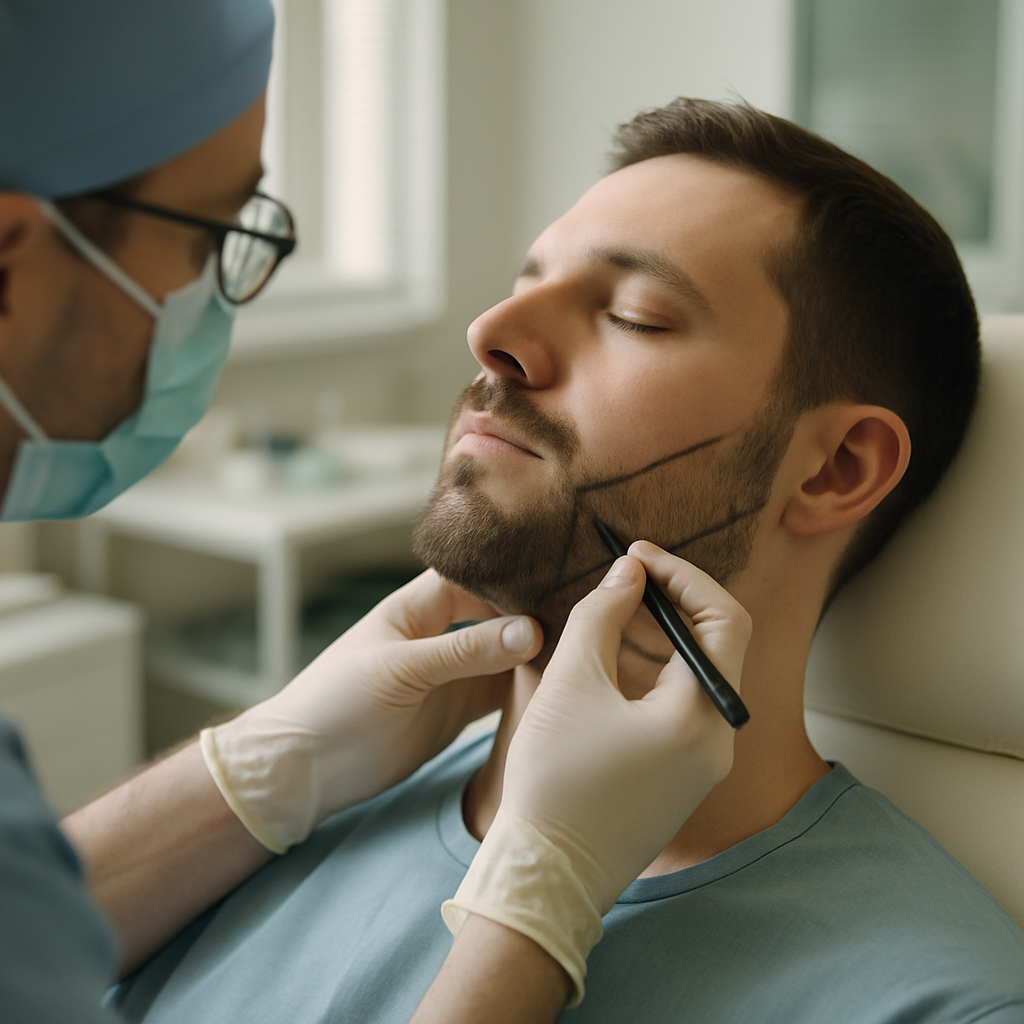
Planning a beard transplant involves much more than simply filling in gaps. During your initial consultation, the doctor examines the symmetry of your face, considering the jawline, chin, cheek contours, and overall proportions. Special attention is paid to creating a beard shape—whether a full beard, goatee, or moustache—that suits your facial structure. The design process includes drawing the desired lines directly on your skin, helping you visualise the new outline before anything is done.
Beyond shape, an experienced surgeon will assess the direction, angle, and curl of your existing facial hair. Matching these characteristics is essential for a natural appearance. For example, hairs on the cheeks usually emerge at a shallower angle compared to those on the chin, and must be implanted to mimic this. The density planned for your transplant is typically within the range of 30–40 follicular units per square centimetre, balancing fullness with the available donor supply. If you are curious about how different techniques—such as Percutaneous Sapphire or DHI—affect implantation precision and naturalness, you may want to review the details at FUE, sapphire blades and DHI: what actually differs.
Timeline: session duration, graft numbers and immediate recovery
A beard transplant procedure is generally completed in a single day, as an outpatient. The process often takes between 4 and 8 hours, depending on the size of the area to be treated and the total number of grafts needed. For a fuller beard, the surgeon may transplant between 2,000 and 4,000 grafts, while smaller areas like the moustache or patchy spots may need just a few hundred.
After the initial facial mapping and marking, you receive local anaesthesia at both the donor and recipient sites. This numbs the areas so you remain comfortable throughout the procedure, though you will be awake and able to communicate. Extraction of grafts—usually from the back of the scalp—is performed with fine punches, and then each graft is examined and prepared under magnification. Implantation follows the mapped design, with each graft placed to match the planned density and angle. The session can be long, so bringing a companion is advised to help you return safely to your accommodation afterwards.
Immediate post-procedure care includes gentle cleaning of the recipient area and instructions on how to avoid infection or disturbance of the grafts. Minor redness, swelling, or pinpoint crusts usually subside within a few days. You can see examples of how results unfold in real patients by browsing our results you can look at closely section. For those interested in the specifics of technique, further information about the Percutaneous Sapphire technique is available.
Risks, Possible Side Effects and the Importance of Medical Oversight
Short-term issues: swelling, infection risk, scarring
After a beard transplant, some immediate effects can be expected. Swelling and mild bruising around the jaw, chin, and cheeks are common, typically peaking within the first 48 hours and resolving over three to five days. Itching and redness often accompany the initial healing process. Pinpoint scabs form at the sites where grafts are placed and usually flake away within a week. Carefully following aftercare instructions—such as keeping the area clean and avoiding unnecessary touching—helps minimise these symptoms.
Infection is a potential risk, as with any minor surgical procedure. Although rare when sterile technique is used, it is important to monitor for increased pain, redness, or pus and contact the clinic promptly if these occur. The risk of visible scarring is usually low when using modern FUE or DHI methods, but fine white dots may remain in the donor area. Experienced surgeons take steps to keep incisions as small as possible, and the British Association of Dermatologists recommends choosing clinics that use these techniques appropriately.
Temporary nerve irritation can cause numbness or tingling in the transplant area. This rarely persists beyond a few weeks. Occasionally, small cysts may develop at the site of implantation. These are generally harmless and can be managed by your doctor if they do not resolve on their own.
Longer-term risks: uneven growth, shock loss, donor depletion
Several months after the procedure, some patients notice patchy or uneven regrowth. This can result from differences in how grafts "take" or from variations in blood supply. In most cases, uneven areas fill in as regrowth continues, but a secondary touch-up may be discussed with your physician if needed. The International Society of Hair Restoration Surgery recognises that variability in growth rates is expected and stresses the value of clear pre-operative planning.
Shock loss—a temporary shedding of either the transplanted or native facial hair—can occur in the first month but usually resolves within several weeks to months. Over-harvesting the donor area is another concern; extracting too many grafts can leave the scalp looking thin or cause visible changes in hair texture. To help you understand these limits, you can explore how many grafts you need, and what limits the donor area. For women or those considering future scalp procedures, protecting the donor zone is especially important.
All these risks can be reduced by verifying the clinic’s technique and ensuring you have a thorough pre-procedure assessment. The examining physician should review your medical history, scalp health, and expectations before any surgery. While complications cannot be entirely ruled out, careful planning and skilled execution do a great deal to lower the chance of unwanted effects.
Recovery Timeline and What to Expect After a Beard Transplant
Week-by-week milestones: healing, shedding and regrowth
Initial healing after a beard transplant generally takes place during the first week. By the second day, small scabs and redness often appear around each graft. These scabs typically become more noticeable between days 2 and 5, then begin to fall off as the area heals. Most people see scab resolution by day 7; however, minor redness can persist a bit longer, particularly in those with sensitive or fair skin.
Shedding of transplanted hairs, sometimes called "shock loss," usually occurs between the third and fourth week after the procedure. This phase can be unexpected, but it is a normal part of the recovery. The follicles remain under the skin and start producing new facial hair after this period. Visible regrowth generally starts between 3 and 6 months, with fine hairs appearing first. Beard density continues to improve, and most patients notice their final result at around 12 months as the hairs thicken and mature.
Timelines vary—factors such as the number of grafts used and your skin’s characteristics play a role. For a step-by-step look at recovery, see the month-by-month after a hair transplant, as the process is similar for beard procedures.
Care instructions: washing, shaving, work and activity restrictions
Face washing should be gentle during the first week. Most surgeons advise rinsing with lukewarm water from day 2 or 3, taking care to avoid direct water pressure and scrubbing. Once the scabs have come off naturally—usually by day 7—you can often return to your usual cleansing routine. Your physician may recommend specific cleansing solutions or ointments based on your skin type and the location of the grafts. For more information about the beard transplant procedure and aftercare, you can visit our beard transplant treatment page.
Returning to work is possible for many within 2 to 5 days, provided your job is not physically demanding or in a dusty environment. If your work involves heavy lifting or outdoor tasks, you may need to wait longer. Shaving the transplanted area is not advised until at least two weeks have passed, and waiting a month is often safer to allow the skin to fully settle. During the early stages, electric trimmers are sometimes recommended instead of razors to reduce irritation.
Activities such as intense exercise, swimming, and direct sun exposure should be avoided for at least two weeks after your transplant. Your physician will tailor these restrictions as needed based on your healing. Always follow the aftercare instructions provided during your consultation and follow-up visits, as these support a healthy recovery and optimal regrowth.
Cost Factors, Clinic Differences and Making an Informed Choice
What affects the price: graft numbers, technique, location
Several elements influence the overall cost of a beard transplant. The number of grafts required is the main variable—smaller touch-ups might use about 500 grafts, while a full beard can require 2,500 or more. The chosen method also matters: for example, Follicular Unit Extraction (FUE) and Direct Hair Implantation (DHI) are two widely used techniques, and their complexity and the time they require can affect the cost. You can learn more about these techniques and how they differ by visiting the beard transplant treatment overview.
Facility location in Turkey, the degree of physician involvement, and the standards of the clinic can also influence pricing. Some clinics offer packages that include transportation, accommodation, and aftercare, while others focus solely on the procedure. When comparing options, consider not only the procedure itself but also the details of what is included in your offer. Evaluating the quality of care and follow-up is as important as understanding the cost structure.
Checklist for choosing a clinic abroad: regulation, support, aftercare
Several factors should be considered when selecting a clinic for beard transplantation in another country. Direct involvement of a physician in your consultation, procedure planning, and follow-up is essential. Avoid relying solely on non-medical staff or remote assessments for your care decisions.
- Facility accreditation: Check that the clinic is licensed and regulated by Turkish health authorities. International accreditations may offer additional reassurance.
- Language support: Make sure the team can communicate with you in French or English, both before and after treatment. Clear communication helps prevent misunderstandings about risks or instructions.
- Transparent aftercare: Clarify whether your package includes follow-up consultations and ask about the protocols for managing any concerns once you return home.
- Real patient results: Ask to review close-up photos of previous beard transplant results from patients with similar goals. This can help you set realistic expectations for your own outcome.
Take the time to ask direct questions about each clinic’s experience, patient support, and what is included in your plan. Careful evaluation of these criteria can help you make a more confident and informed decision about your treatment abroad.
Frequently asked questions
-
A full beard transplant usually requires between 2,000 and 4,000 grafts, depending on your desired density and the area to be covered. Your physician will estimate the exact number after a thorough facial assessment.
-
Transplanted hair can sometimes be used to camouflage scars or burns on the face if the surrounding skin is healthy and has good blood supply. The feasibility and likely outcome are determined during your consultation with a specialist.
-
Shaving or trimming is generally permitted after about two weeks, once the grafts have had time to anchor and the skin has healed. Your clinic will give you personalised aftercare instructions.
-
Short-term risks include swelling, redness, and infection, while longer-term risks can involve uneven growth, scarring, or loss of transplanted hairs. Careful technique and physician oversight help minimise these risks.
Sources
- International Society of Hair Restoration Surgery
- British Association of Dermatologists