Can a Vegan Diet Affect Your Hair Growth and Shedding?
A closer look at nutritional gaps, other causes of shedding, and the difference between correcting a deficiency and treating hair loss.
A vegan diet does not inherently cause hair loss, but inadequate energy or nutrient intake can contribute to shedding alongside causes unrelated to food.
The timing of shedding can reveal more than the diet label
If you notice more hair in the shower after switching to vegan meals, the timing deserves attention—but does not establish the cause. Changes in your food intake, health, weight and medicines matter more than the dietary label.
What changes when too many hairs enter the resting phase
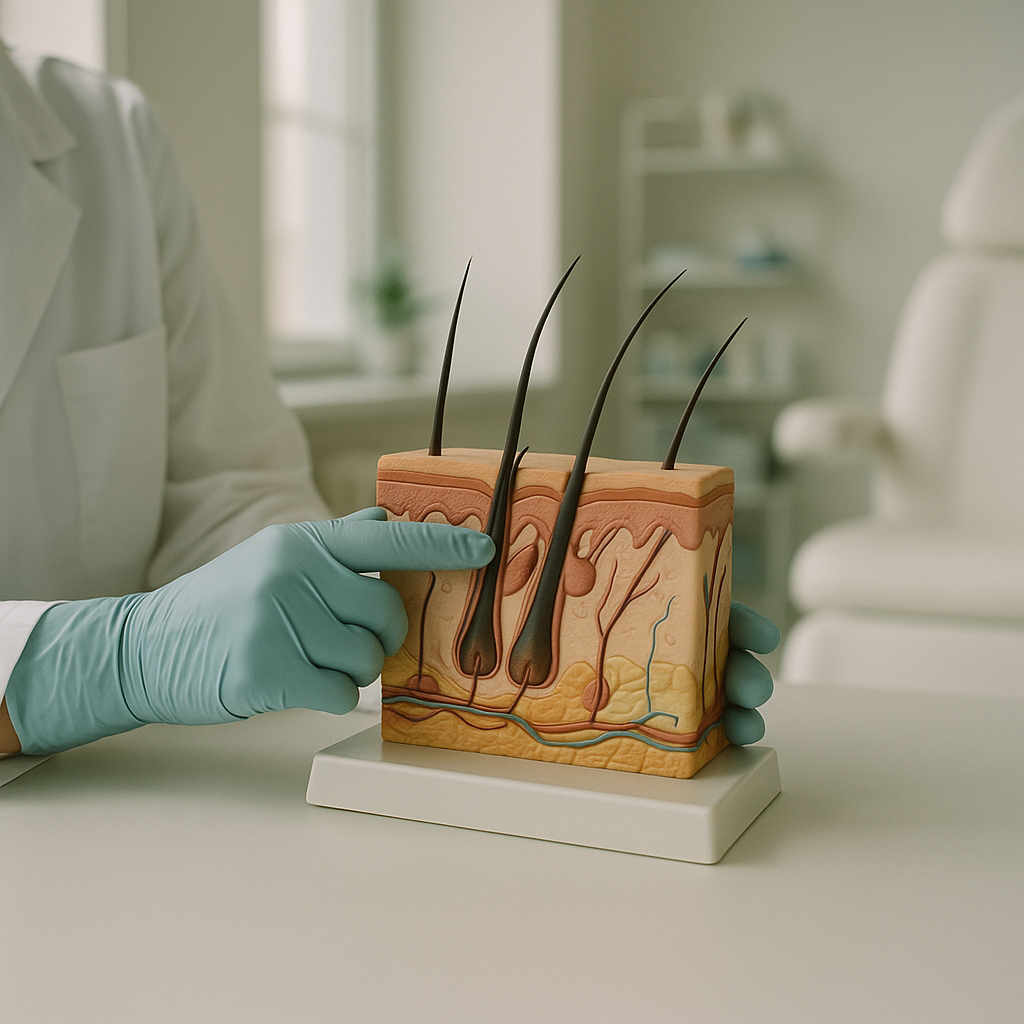
Each follicle cycles through growth, rest and release of its hair. These cycles overlap, so some shedding happens while other hairs keep growing. The British Association of Dermatologists describes telogen effluvium as increased shedding associated with more hairs entering the resting phase, often after a trigger.
Shedding may affect the whole scalp, unlike the gradual widening of a parting or recession associated with hereditary thinning. Both can coexist; these patterns alone do not establish a diagnosis.
Shedding may begin around 2–3 months after a trigger. Once the trigger is addressed, it may ease over 3–6 months, while visible fullness can take 6–12 months to improve. Your course depends on the cause, its duration and whether other forms of hair loss overlap.
Why a dietary change may coincide with another trigger
Restrictive eating, insufficient calories and rapid weight loss can contribute to shedding. A varied vegan diet and an energy-restricted diet are not nutritionally equivalent. Recent illness, childbirth, thyroid problems, medication changes and hereditary thinning also deserve consideration.
If scalp bumps accompany shedding, information on folliculitis symptoms and causes explains a separate concern, not evidence of a dietary deficiency. When exploring cosmetic dermatology servicescheck whether assessment of your concern is available rather than assuming the newest dietary change explains it.
Nutrient gaps are not the same as proven regrowth targets
Protein and iron deserve a closer look
Your follicles use amino acids from protein to make keratin, hair’s main structural material. The European Food Safety Authority sets an adult protein reference intake of 0.83 g/kg of body weight per day. This is a general nutritional reference, not a hair-growth dose. Pregnancy, older age, intensive training and illness may require individual assessment.
Iron deficiency can contribute to shedding. Ferritin reflects iron stores, but inflammation can raise it and obscure depleted stores. No universally accepted ferritin target predicts regrowth. Correcting deficiency addresses a nutritional problem without proving that iron was the only reason for thinning.
B12, zinc, vitamin D and essential fats in context
A dietary label cannot tell you which nutrient, if any, is lacking. These nutrients have different functions, and evidence of a low level does not automatically establish the cause of shedding:
- B12: supports blood formation and nerve function. Direct evidence that supplementation restores hair in people without deficiency is limited.
- Zinc: supports cell growth. A low result needs interpretation alongside your diet, health history and examination.
- Vitamin D: supports bone and other functions. An association with hair loss does not establish that supplementation improves density.
- Essential fats: contribute to normal cell function. Additional omega-3 intake is not an established hair-loss treatment.
When viewing treatment results you can look at closelyremember that photographs cannot isolate a nutrient’s contribution. They also cannot predict your response, which depends on the cause of hair loss and any treatment received.
| Nutrient | Relevant vegan sources | What it means for hair-loss assessment |
|---|---|---|
| Protein | Lentils, beans, tofu and tempeh | Insufficient intake deserves attention; extra protein beyond your needs is not an established regrowth treatment. |
| Iron | Pulses, tofu and iron-fortified cereals | Possible deficiency requires interpretation of your history and blood results, not an assumed hair-specific ferritin target. |
| Vitamin B12 | Foods fortified with B12 and suitable supplements | Reliable intake is necessary, but supplementation does not establish that B12 was the cause of shedding. |
| Zinc | Beans, seeds, nuts and whole grains | Correcting a confirmed shortfall differs from taking additional zinc without evidence of deficiency. |
| Vitamin D | Fortified foods and suitable supplements | A low result may need treatment for general health; it does not by itself prove the cause of hair loss. |
| Omega-3 fats | Flaxseed, chia seeds and walnuts | These contribute to dietary adequacy but are not established treatments for restoring hair density. |
Build meals around what you add, not just what you remove
Make protein and adequate energy part of regular meals
Start with meals you enjoy. Oats with fortified soya drink and nut butter provide carbohydrate, protein and fat. Lentils with peppers and rice, or tofu with broccoli and potatoes, offer other practical combinations.
Beans, lentils, tofu and tempeh can provide substantial protein; nuts and seeds add smaller amounts alongside fats and energy. Spread these foods across your day rather than relying on dinner alone. You do not need complementary plant proteins at every meal: variety across the day matters.
If high-fibre meals leave you full before you have eaten enough, try smaller meals and snacks. Olive oil on vegetables, tahini in dressing or nut butter on toast can add energy without much extra volume. Adequate protein does not compensate for consistently eating too little.
Pair plant-based iron with vitamin C
The National Health Service advises that vitamin C helps your body absorb plant-based iron. Try chickpeas with peppers, lentils with tomatoes, or beans followed by citrus fruit.
For B12, the National Health Service recommends reliable sources through fortified foods or supplements on a vegan diet. Check labels: calcium fortification does not necessarily mean a plant drink contains B12. Routine B12 provision is nutritional maintenance, not a hair-loss treatment. A suspected deficiency needs assessment rather than food changes alone.
Ground flaxseed, chia seeds and walnuts provide plant-based omega-3 fats and can be added to porridge or snacks. Check iodine sources too: many plant drinks contain little unless fortified. Extra iodine is not a hair remedy, and more is not necessarily helpful.
An examination gives blood tests their meaning
When to arrange a medical review
If shedding persists or visibly increases, arrange a medical assessment rather than repeatedly changing your diet. Distinct bald patches, scalp discomfort, scaling or unusual fatigue also warrant review. Similar symptoms can have different causes.
A physician needs to examine your scalp to assess widespread shedding, broken hairs, patterned thinning or a localised problem. Photographs taken in similar lighting can document changes but cannot replace examination. Note when the change began and whether it has progressed steadily or fluctuated.
What your history, scalp and test results can clarify
Bring details of dietary changes, weight changes, recent illness, medicines and menstrual blood loss where relevant. Explain whether you have removed foods, reduced portions or started supplements; bring supplement labels if possible.
A full blood count and ferritin may be appropriate if your history suggests anaemia or depleted iron stores. B12, thyroid function, vitamin D or zinc tests may be considered when symptoms or dietary factors justify them. There is no universal testing package.
Describe any redness or pustules around follicles, including when they appeared and whether they itch or hurt. The explanation of how folliculitis develops and what may ease symptoms can help you prepare questions about these findings.
The final decision about investigations and treatment belongs to the examining physician. A result within the laboratory reference range does not explain persistent hair changes by itself; an abnormal result also needs clinical context. Each test should answer a specific question.
Supplements and restrictive changes have limits
Who should avoid self-directed restriction or supplementation
If you are losing weight unintentionally, eating too little or managing an eating disorder, removing more foods is not an appropriate response to shedding. The priority is supported nutritional care, not a longer list of exclusions. Pregnancy, kidney disease and suspected problems absorbing nutrients also call for individual advice before you change your diet or add supplements.
These circumstances do not make vegan eating itself unsuitable. They make unsupervised restriction and high-dose supplementation inappropriate substitutes for assessment. A supported vegan pattern can be adjusted around your nutritional requirements, medical conditions and relationship with food, ideally with a dietitian involved.
Whether you need supplements depends on their purpose. Reliable vitamin B12 provision is part of ordinary vegan nutrition; it is not a treatment specifically for shedding. Treating a demonstrated iron or other nutrient deficiency is a separate decision, with replacement and monitoring chosen for that finding. A supplement labelled for hair does not necessarily meet either need. Do not remove a prescribed supplement simply because you have not noticed a hair change; discuss its original purpose with the prescriber.
Possible side effects and misleading hair-product claims
Iron can cause nausea or constipation. Excess zinc can disrupt copper balance, while excessive vitamin A or selenium can contribute to hair loss rather than address it. Taking several hair supplements together can duplicate these ingredients, especially if you also use a multivitamin. Bring the labels to your review so the combined intake can be checked.
Biotin has little supporting evidence for improving hair without a deficiency. It can also interfere with some blood tests, producing misleading readings. Tell the clinician and laboratory that you take it, and follow the laboratory's instructions before testing; there is no single stopping interval appropriate for every test and preparation.
Claims about “growth support” do not establish that a product treats your cause of shedding. Adding another formula may increase exposure to overlapping ingredients while leaving low intake, an absorption problem or a non-nutritional cause unresolved. Review the reason for taking each supplement rather than stacking products.
What to reassess if better nutrition does not settle the shedding
Review the original explanation instead of adding more supplements
If your intake has improved but shedding remains troublesome, arrange a follow-up rather than extending supplementation indefinitely. Bring your original test results, supplement list and any scalp photographs taken under similar lighting. The review should check:
- Was the initial deficiency confirmed, or only suspected from your diet history?
- Was replacement tolerated and taken as advised?
- Would follow-up testing help assess whether the deficiency has corrected?
- Does a trigger remain active, such as inadequate intake, illness or ongoing blood loss?
- Has the distribution of thinning changed, with widening of the parting, recession or patchy areas?
Persistent shedding can justify reconsidering the original diagnosis, including ongoing blood loss, absorption problems or a coexisting scalp condition. Nutritional improvement does not prove that nutrition was the only cause. A repeat examination helps decide which possibilities warrant investigation rather than another supplement.
Where hair restoration fits—and where it does not
Correcting reversible shedding is different from assessing established patterned hair loss. Understanding what a hair transplant involves makes that distinction clearer: surgery redistributes existing follicles. It does not treat a nutritional deficiency or stop an active shedding trigger, and it is not the automatic next step after dietary changes.
If surgery is being assessed, donor supply and the stability of hair loss matter. Available follicles are finite, and continuing thinning can change future coverage needs. Reviewing how donor supply limits graft planning can help you prepare questions about these constraints. Surgery may be considered only for an appropriate diagnosis; the final decision belongs to the examining physician.
Use hair restoration results you can examine closely as discussion material, not a prediction: coverage differs with donor density, hair characteristics and the extent of thinning. If you are considering Türkiye, nutritional and medical assessment can begin locally. Before travel, clarify who will review test results, select any proposed technique, provide aftercare and investigate continued shedding after you return. Ask how the local clinician and surgical team would share findings if further assessment becomes necessary.
Frequently asked questions
-
You can usually continue eating vegan while the cause is investigated. Tell your clinician and dietitian that you want any dietary adjustments to remain plant-based, so they can discuss options that respect your preferences and medical circumstances.
-
Fasting depends on the tests requested and the laboratory's instructions; a hair-loss assessment does not automatically require it. Ask before your appointment whether you should eat normally and how to handle your usual medicines or supplements that morning.
-
Ask your pharmacist to check both the active ingredient and the capsule or other inactive ingredients. Some preparations contain animal-derived components, and an alternative formulation may be available. Do not stop a prescribed treatment while checking without discussing the change.
-
Ask which records the clinician wants, such as dated blood results, a medicine and supplement list, and a summary of when the shedding began. Confirm the consultation language and whether translations are needed for records written in French. A remote discussion can help organise the visit, but photographs and documents cannot establish every aspect of your scalp condition.
Sources
- National Health Service
- British Association of Dermatologists
- European Food Safety Authority