Understand hair-pulling urges, the treatments available and how a scalp assessment can help distinguish recoverable thinning from lasting follicle damage.
Hair can grow back after trichotillomania when follicles remain intact, but continued pulling and follicle damage can limit regrowth.
Recognising the pattern behind repeated hair pulling
Uneven hair loss and urges you may not notice
You might first notice a patch that looks uneven rather than completely bare, with short hairs beside longer ones. Trichotillomania is a hair-pulling disorder involving recurrent pulling, hair loss, difficulty stopping, and distress or disruption to daily life. Finding a broken hair or occasionally touching your hair does not establish a diagnosis.
The pattern can include irregular scalp patches, thinning eyebrows or gaps in the eyelashes. Hairs broken at different lengths are another clue, but appearance alone does not explain the cause. Some people spend considerable time searching for a hair with a particular texture, such as one that feels coarse or different from its neighbours.
Concealment can become part of everyday life: changing your parting, using makeup over eyebrow gaps, or avoiding swimming, photographs and social situations. If you browse hair restoration result photographs, remember that visible coverage does not describe someone's pulling behaviour or the emotional effect of hair loss.
Automatic pulling happens with limited awareness, perhaps while reading or watching a screen. Focused pulling involves deliberately responding to an urge or selecting a particular hair. Both patterns can occur in the same person. Tension beforehand or relief afterwards may occur, but neither experience is universal.
Why pulling starts and what can keep it going
According to Mayo Clinic, the causes of trichotillomania are not fully understood and may involve genetic and environmental factors. This underlying susceptibility is different from an immediate trigger. Boredom during a quiet evening, stress before an appointment, or discomfort from a hair's texture may prompt pulling without explaining why the disorder developed.
Onset often occurs in childhood or adolescence, and the condition can continue into adulthood. It is not a failure of willpower. Pulling may become linked to familiar settings or activities, making it difficult to interrupt even when you want to stop.
For a clinical discussion, describing what happens before, during and after pulling is more informative than judging yourself. Whether you notice your hand moving immediately or only discover pulled hairs later is useful information.
A medical examination separates pulling from other causes
What your clinician needs to assess
A consultation gives you space to describe pulling patterns, attempts to stop and effects on daily life. Your clinician also asks about medicines and other symptoms before examining your scalp, eyebrows or other affected areas. Mayo Clinic describes assessment as including checks for other explanations for hair loss and evaluation of how pulling affects daily life.
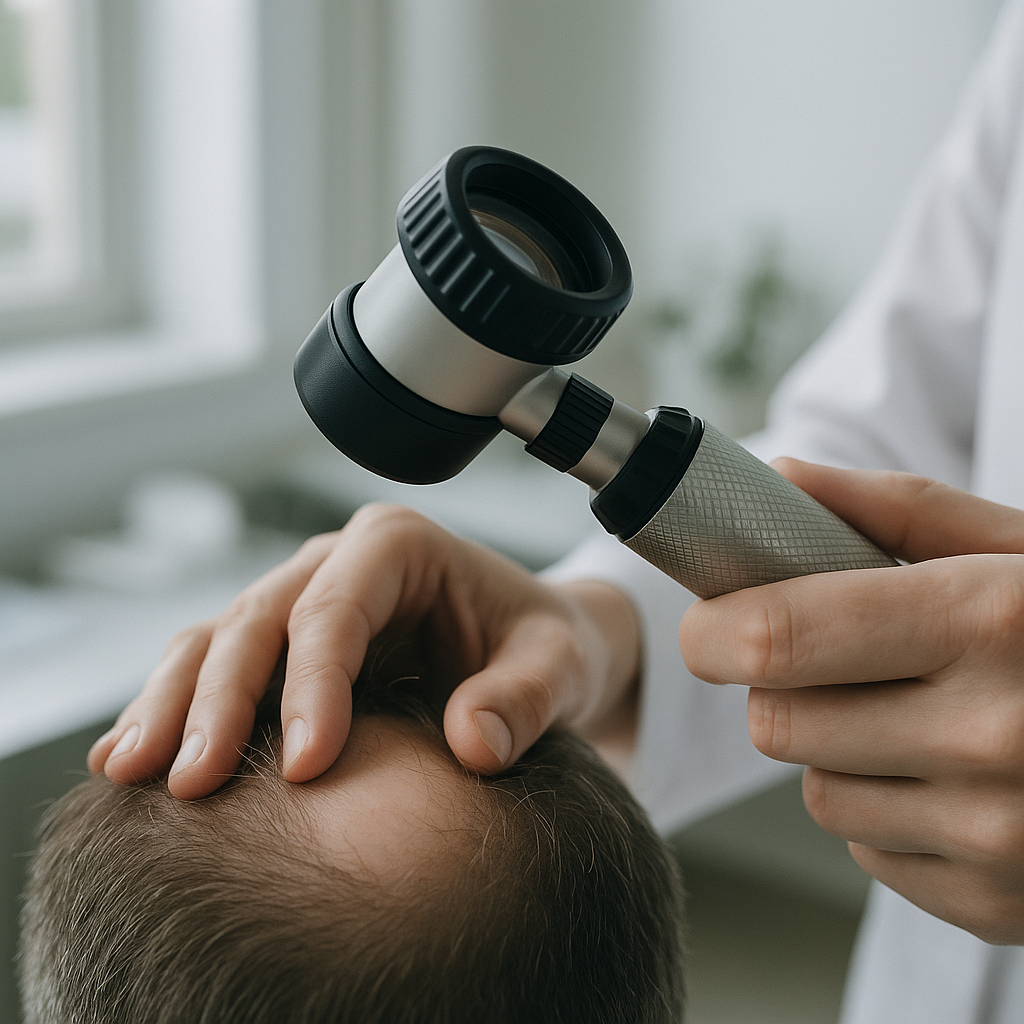
Magnified scalp inspection, called trichoscopy, helps identify broken hairs, inflammation and possible scarring. Photographs alone cannot reliably establish the cause of thinning: they cannot replace close examination or your history. Blood tests or a small skin sample may be considered when findings suggest another condition, rather than automatically for everyone.
These distinctions matter because different causes require different management. The final decision about diagnosis and procedural suitability, including whether a hair transplant could be considered, belongs to the examining physician.
Folliculitis, thyroid-related shedding and other lookalikes
Itchy or tender bumps, sometimes containing pus, can occur with folliculitis—inflammation of hair follicles. DermNet explains that examination usually identifies the pattern and that a swab may help when infection is suspected. The explanation of folliculitis symptoms and assessment describes these features in more detail.
Underactive or overactive thyroid function can disrupt the hair cycle, causing more diffuse shedding rather than isolated pulling-related patches. DermNet identifies thyroid disease as a possible cause of diffuse hair loss. Thyroid testing is guided by symptoms and examination findings, such as widespread shedding alongside changes in energy, weight or temperature tolerance.
The following comparison explains what an examination may distinguish; it is not a self-diagnosis checklist.
- Pulling-related loss: irregular patches and hairs of different lengths; discussion explores pulling behaviour and difficulty stopping.
- Folliculitis: inflamed bumps around follicles; examination and sometimes a swab help clarify the cause.
- Thyroid-related shedding: broader thinning; associated symptoms may support blood testing.
- Alopecia areata: often smooth patches; scalp examination helps distinguish it from broken-hair patterns.
- Traction-related loss: thinning where hairstyles repeatedly place tension; styling history helps explain the distribution.
More than one condition can coexist. Reporting both pulling and scalp discomfort, for example, helps your clinician avoid assuming that every affected area has the same explanation.
Treatment works on urges, habits and daily triggers
Habit reversal training and practical support
You may notice your hand moving towards your hair while scrolling, reading or settling to sleep. The NHS explains that treatment commonly involves cognitive behavioural therapy with habit reversal training. The aim is to reduce pulling and its impact on daily life, rather than address visible thinning alone.
Awareness training helps you recognise the movement, sensation or situation preceding a pull. You then identify triggers, such as boredom, tension or searching for a hair with a particular texture. A therapist helps you practise a competing response: gently closing your hands or holding an object instead of reaching for hair.
Practical adjustments can interrupt familiar routines. Move tweezers out of reach, change your habitual screen-time position, or agree on a discreet, nonjudgmental signal with someone you trust. Ask what support feels welcome; monitoring, criticism and repeated reminders can add distress. These measures support treatment but do not replace professional assessment.
With a therapist, you can prepare for setbacks and rehearse responses to new triggers, including stressful periods or changes in routine. When a child is affected, involve a clinician experienced with children so that support matches their age and understanding.
Where medicines fit and what remains uncertain
No medicine is a standard solution for everyone who pulls their hair. Mayo Clinic discusses options including clomipramine and N-acetylcysteine, while noting limited evidence. Approval status for this use must be checked locally, including in your home country if care begins in Türkiye. Availability does not establish that an option is appropriate for you.
A prescriber considers your symptoms, medical history, other medicines and potential interactions. Treatment for associated anxiety or depression has a different purpose from treatment specifically intended to reduce pulling, although both concerns may need attention. Do not start medicines or supplements for pulling without professional advice.
The course differs between people: urges may lessen, persist or return, and reduced pulling may not coincide with visible regrowth. Ongoing support can remain useful after hair starts returning, particularly when daily triggers change. Progress also includes less distress and less time spent pulling—not hair coverage alone.
Risks to recognise and reasons to defer procedures
Skin injury, swallowed hair and treatment side effects
Repeated pulling can leave your scalp sore, break the skin and allow infection to develop. Continued injury may also cause lasting follicle damage, limiting regrowth. Mayo Clinic warns that swallowed hair can accumulate in the digestive tract and cause serious complications, including blockage.
Arrange an assessment if pulling is difficult to control, causes distress or produces visible thinning. Seek prompt medical advice for spreading redness, pus or fever. Severe abdominal pain or persistent vomiting, especially if you swallow hair, needs urgent assessment. Tell the clinician about hair swallowing, even if discussing it feels uncomfortable; that detail can affect the assessment.
Medication side effects depend on the option and can include nausea or dry mouth. Discuss unwanted effects with the prescriber rather than changing treatment yourself. If surgery is eventually considered, its risks include bleeding, infection, scarring and poor graft growth. These are separate from the harms caused by continued pulling.
When hair restoration is not an appropriate next step
During active pulling, a hair transplant procedure is generally deferred because transplanted hairs can also be pulled. Transplantation does not address the urge itself. Untreated scalp inflammation or unresolved uncertainty about the diagnosis are additional reasons to pause procedural planning and address the underlying concern first.
Insufficient donor supply may limit how much coverage can be attempted. Understanding how donor hair limits graft planning explains why available hair matters as much as the size of a thinning area. Extensive scarring can further restrict options because scarred tissue may not support grafts predictably.
There is no universal pull-free interval that establishes readiness for surgery. An examination must assess scalp health, donor reserves and the pattern of pulling over time. The final decision belongs to the examining physician, informed by your treatment history and current support.
When reviewing hair restoration result photographs, remember that images cannot show whether urges are controlled or whether your scalp could support a similar approach. Procedural suitability requires more than a visual resemblance to another person's thinning pattern.
| Possible explanation | Clues you might notice | Assessment that may help |
|---|---|---|
| Repeated pulling | Irregular patches and hairs of different lengths | Pulling history and magnified scalp examination |
| Folliculitis | Tender or itchy bumps, sometimes containing pus | Skin examination; a swab when indicated |
| Thyroid-related shedding | More diffuse thinning, sometimes with other symptoms | Medical history and targeted thyroid blood tests |
| Alopecia areata | Defined patches that may appear smooth | Scalp examination and dermoscopy |
| Traction-related loss | Thinning where hairstyles repeatedly pull | Styling history and examination |

Regrowth depends on follicle health, not just elapsed time
What recovery may look like on the scalp, brows and lashes
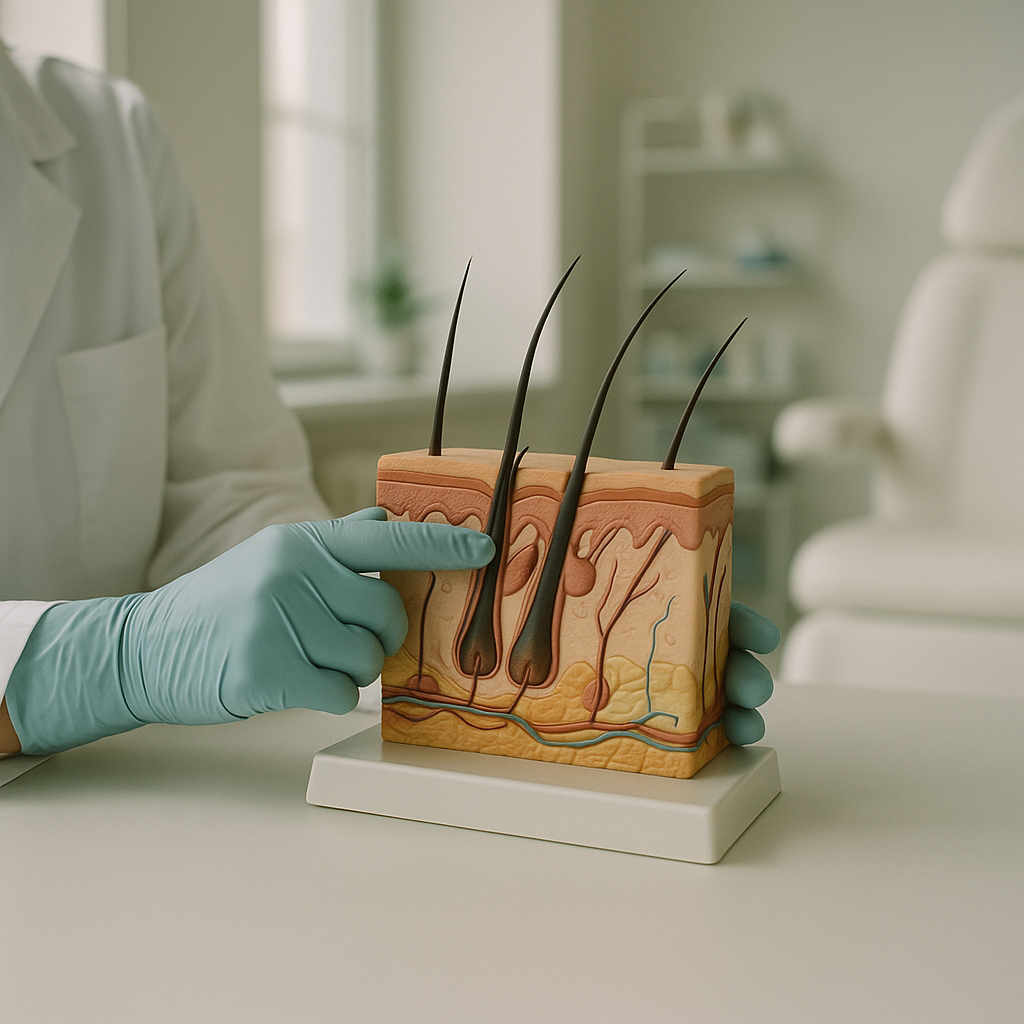
A broken shaft leaves part of the hair behind; it does not necessarily stop the follicle beneath it producing hair. An emptied follicle may also remain capable of growth. Where scar tissue has replaced a follicle, however, that follicle cannot produce another hair. Neither a shiny patch nor an absence of visible hairs proves permanent loss without examination.
If scalp follicles remain viable and pulling has stopped, visible regrowth may become noticeable over approximately 3–6 months. Fuller coverage may take 6–12 months or longer. Neither interval establishes what you will regain. Longer or more intense pulling, follicle scarring, continued breakage and a second hair-loss condition can change both the amount and pace of recovery.
Eyebrows follow a different growth cycle from scalp hair, so visible filling-in may take several months. Eyelashes also have their own cycle; returning lashes can appear unevenly over several months. Scalp timelines should not be used as deadlines for either area. Natural regrowth after reduced pulling also differs from the recovery stages after a hair transplant, which involve surgically moved follicles.
Caring for emerging hair without restarting the cycle
Use gentle cleansing, avoid repeated rubbing or plucking, and reduce traction from tight hairstyles or extensions. Rather than checking individual hairs repeatedly, consider occasional photographs under similar lighting. Assessment of skin and hair concerns through cosmetic dermatology services can help clarify what needs attention without assuming that a procedure is indicated.
Short regrowing hairs may feel coarse, stiff or different from neighbouring strands. That texture can become a fresh cue to search, touch and pull. Before regrowth appears, rehearse a competing response with your behavioural therapist: resting your hands flat or holding a soft object when the urge to inspect a hair begins. Avoid plucking hairs simply because they feel different.
Evidence for platelet-rich plasma, or PRP, specifically for trichotillomania-related loss is limited. It does not address pulling behaviour, and should not replace behavioural care or an assessment of whether follicles remain capable of growth. Adding a procedure is not a necessary step in observing recovery.
Before considering hair restoration in Türkiye
A decision checklist before you travel
Before booking travel from a French-speaking European country, separate treatment for pulling from any restoration proposal. Travel and surgery are optional; observation with continuing behavioural care at home may remain appropriate. Use these questions to prepare:
- Has the cause of the loss been established, including any additional scalp condition?
- Is pulling being addressed, with support available after you return home?
- Has spontaneous regrowth been observed long enough to inform the discussion?
- Could an in-person consultation change or cancel the proposed procedure?
Remote screening can help organise an appointment, but photographs cannot replace examination. Request a consultation and written instructions in a language you understand, including arrangements for interpretation if needed. The final decision about medical suitability belongs to the examining physician; you can also choose not to proceed.
During hair transplant assessment and planning, ask how the scalp and donor area will be examined, whether hairline planning is relevant, and what follow-up is proposed. Request a written explanation of the reasons to proceed, defer or continue observation, rather than relying only on a proposed technique name.
Technique terminology and continuity of care
FUE describes an approach to extracting individual follicular grafts. Sapphire refers to a blade material used to create recipient sites. DHI is an implantation term, commonly referring to placement with an implanter device. These describe different parts of a procedure, not three equivalent alternatives, and the labels alone do not establish suitability for pulling-related loss.
Ask who will review concerns after you return home, how you can contact that clinician, and how examination findings and procedure records will reach your local clinician. Clarify the clinic’s stated one-year follow-up: which appointments are included, whether they are remote or in person, and who coordinates additional care. A follow-up period is not evidence of a particular outcome.
If you review hair restoration result photographs, ask whether the examples involve comparable causes of loss. Images cannot establish your likely regrowth or whether pulling has remained controlled. Keep behavioural appointments independent of restoration follow-up, so support for urges continues even if you postpone or decline a cosmetic procedure.
Frequently asked questions
-
Trichotillomania is classified among obsessive-compulsive and related disorders, but it is not the same diagnosis as OCD. Your pulling may involve a sensory urge or happen with little awareness rather than follow an intrusive thought. A mental health professional can assess whether either condition, or both, helps explain your experience.
-
You can note where you pull, what you are doing at the time, whether you notice an urge and how the behaviour affects your day. Bring a list of medicines and supplements, plus occasional photographs if taking them feels comfortable. You do not need to count every hair or prepare a perfect diary.
-
You can ask about loose head coverings, hairpieces or cosmetic camouflage while the pulling is being addressed. Avoid tight attachments, adhesives on irritated skin and products that encourage repeated rubbing during removal. If a covering makes you check or touch the area more often, discuss another option with your therapist or dermatologist.
-
Minoxidil may be considered for selected scalp concerns, but evidence specifically for trichotillomania-related regrowth is limited and it does not treat pulling urges. It can irritate the skin and should not be applied to damaged areas or used on eyebrows or eyelashes without medical advice. Ask your dermatologist whether there is a separate indication for using it.
Sources
- NHS — Trichotillomania
- Mayo Clinic — Trichotillomania symptoms, causes, diagnosis and treatment
- DermNet — Trichotillomania, folliculitis and diffuse alopecia